 |
When In India, taking the glorious glimpses of the royal beasts in the jungle very closely and experiencing the pleasure of living those creatures in a natural habitat is such a rewarding moment. As an animal lover you must be enthusiastically thinking of some adventurous activities that may allow you such exciting experiences. India is the only land in the world that encompasses this wholesome experience of encountering the deadly variant creatures very closely. The India wildlife tour offers different safari experiences to the tourists to watch the deadly creatures at its amazing jungles and wild reserves.
These wild reserves have been particularly established for the welfare and preservation of the extinguishing wild species from earth. Additionally such attractive reserves are the perfect reasons for special wildlife holidays India that attracts thousands of national and international vacationers to the various parts of this unparalleled land of wild beings.
Let us find some of the incredible wildlife reserves that embellish and promote the wildlife tour India:
Corbett National Park 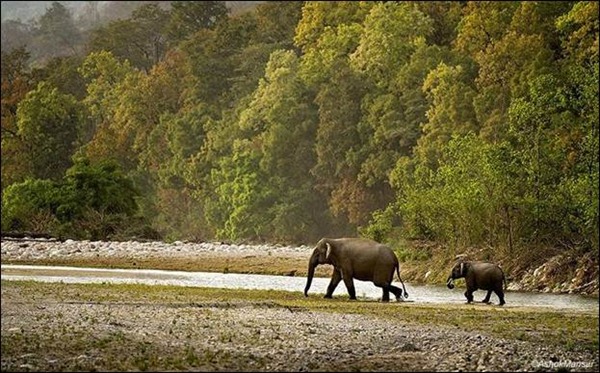
Considered as the first National Park in India, the Corbett Park is one of the most popular reserves in India that invades large varieties of flora and fauna at its soothing and attractive surroundings. Earlier known as Hailey National Park, this wild reserve came forward with a new name as Jim Corbett National Park in the honor of the legendary hunter turned conservationist in 1956. The Corbett reserve is located in the Himalayan foothills in Uttaranchal state and is elevated at an altitude of 365 m – 1100 m above the sea level.
Ranthambore National Park 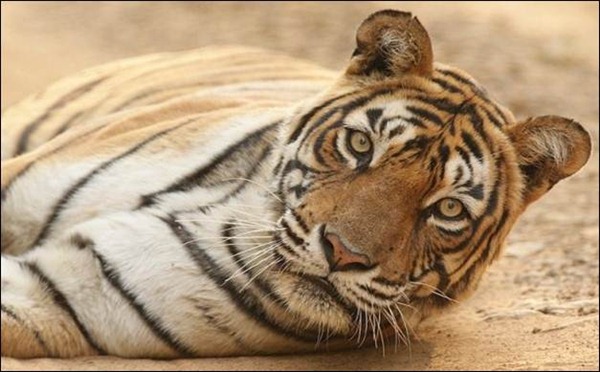
Ranthambore National Park is one of the largest national parks in India situated in Sawai Madhopur district of southeastern Rajasthan. In 1955 it was being established as Sawai Madhopur Game Sanctuary by the Government of India and was declared as one of the Project Tiger Reserves in 1973. Tigers can be found in abundant in this area and one can find them even in day time freely roaming at the surroundings. An elephant and jeep safari can be the perfect mediums to watch these majestic predators in the Ranthambore jungle.
Kaziranga National Park 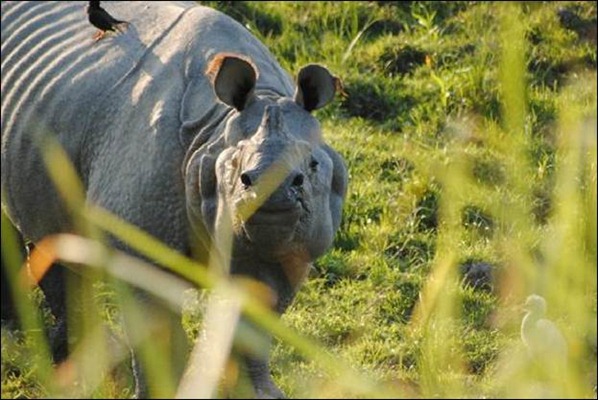
The eastern part of India proudly holds the large variety of carnivorous animals in the Kaziranga National Park in Assam. The Kaziranga National Park is famous for one horned rhinoceros, Hoolock Gibbons and wild buffalo in Golaghat and Nagaon district of Assam covering an area of 430 sq km. The landscape of Kaziranga is simply amazing and thus one can find a wide variety of animals in its vicinity. Along with that the tourists can enjoy various interesting activities including bird watching, elephant and jeep safari.
Bandhavgarh National Park 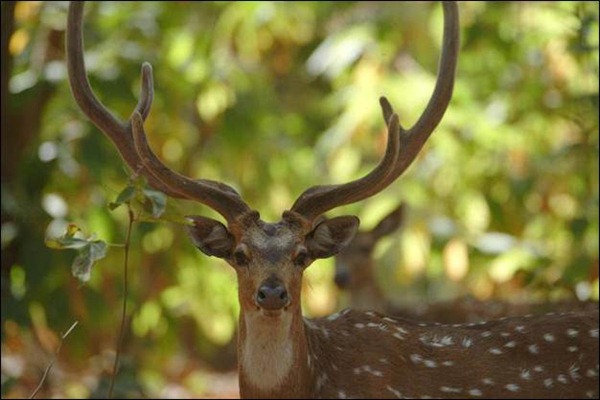
Bandhavgarh National Park is widely spread in Vindhya hills in Madhya Pradesh by covering the core area of 105 sq km and the buffer zone of 400 sq km. The topography of this reserve varies between steep ridges, undulating, forest and open meadows. Bandhavgarh is famous for the highest density of the Royal Bengal Tigers in India. Earlier the location was the hunting preserve of the Maharaja of Rewa but nowadays it is the famous hub for attractive white tigers. The tourists can enjoy the soothing environment, vast landscapes and close encounters of a variety of wild animals including royal Bengal tigers and white tigers.
When In India, a visit to such lovely wild reserves will really be a fascinating experience. Wildlife holidays India will definitely bring remembering and outstanding experiences for animal and nature lovers.
|
Showing posts with label wildlife sanctuary. Show all posts
Showing posts with label wildlife sanctuary. Show all posts
Wednesday, June 27, 2012
Wildlife tour India – an exciting journey through wildlife sanctuaries When In India


Monday, February 6, 2012
Mt. Hamiguitan, Range Wildlife Sanctuary
Mt. Hamiguitan, Range Wildlife Sanctuary
Scene Stealer
By JOJIE ALCANTARA

Philippine Eagle (Jojie Alcantara)
MANILA, Philippines — Imagine a spectacular range of mountains covering a 6,834-hectare of total surface area of several forest-type characteristics harboring endemic, threatened, rare and economically important species of flora and fauna.
Visualize that within 225 hectares of this lush sanctuary thrives a rare mossy-pygmy forest with century-old wild trees growing to an average height of only four to five feet.
The stunted growth of such unique vegetation is due to the soil’s high concentration of minerals like chromium, iron, nickel and magnesium. An Almaciga (Agathis philippinensis) has the highest average height of only 2.4 m. Other abundant species are Cedar, Lokinai, Yakal, Dapdap and Bitanghol. Within this area dwells an amazing hidden lake, or Tinagong Dagat as well as others falls and creeks.
The Mt. Hamiguitan Range Wildlife Sanctuary has been declared by the Philippine government in July 2004 under the Republic Act 9303 as a protected area under the category of wildlife sanctuary. Located in Davao Oriental in Mindanao, it is a priority site for conservation as designated by Conservation International in view of its high level of biodiversity and unique and significant biological and physical attributes. It became a component of the Philippines’ National Integrated Protected Areas System (NIPAS) pursuant to R.A. 7586 of 1992.
Hamiguitan spans two municipalities and one city, namely, the municipalities of San Isidro and Governor Generoso, and the City of Mati in the Province of Davao Oriental, at altitudes ranging from 170 to 1,637 meters above sea level.
This protected sanctuary belongs to 15 biogeographic zones in the Philippines considered to have the highest land-based biological diversity in terms of flora and fauna per unit area, including the largest and most unique area of ‘pygmy’ forest with century-old trees thriving in a highly basic ultramafic soil rich in minerals. It is nominated for inclusion in the UNESCO World Heritage List for its outstanding universal significance of possessing high and varied ecosystem with many endangered, endemic and rare species of flora and fauna.
Hamiguitan is home to the threatened majestic Philippine eagle (Pithecophaga jefferyi). In a recent inventory and assessment, the forest has been found to have high endemic species of plants, trees, shrubs, herbs and vines, not to mention new records of discovery in Mindanao and the Philippines.
Sadly, several mammals have been observed to be threatened and vulnerable: The Golden-crown Flying Fox, Philippine Tarsier, Philippine Warty Pig, the Philippine Brown Deer, the Philippine Mossy-pygmy Fruit Bat; and the Asian Palm Civet. Likewise, endemic species of birds like the Philippine Cockatoo, Dark-eared Brown Dove, Tarictic Hornbill, Grey-hooded Sunbird and Giant-scoop Owl are endangered or vulnerable.
The presence of globally threatened species and the discovery of site-endemic pitcher plants, new species of butterflies and the newly discovered Hamiguitan hairy-tailed rat (Batomys hamiguita) —a yellow-brown rodent with a long furry tail thriving in dwarf, mossy forests – all the more prove how the nominated property possesses outstanding universal value, a high biodiversity “hotspot” in the Philippines.
The management system is being managed by the Protected Area Management Board (PAMB) and the Protected Area Wildlife Bureau (PAWB) of the Department of Environment and Natural Resources (DENR) of the Philippines.
Board Member Justina Uy started the conservation and the preservation of Mt. Hamiguitan when she was still mayor of San Isidro many years back. In 2008, Provincial governor Corazon Malanyaon pushed to have it recognized and placed in the tentative list of nominated properties of UNESCO World Heritage List when the presence of the rare pygmy forest drew attention as a natural heritage.
The mystical wild garden in the middle of nowhere sits serenely in cool weather, as if it was pulled out of an enchanted fairytale book, shrouded in mist for more than a century, perhaps. Many trekkers come to visit and explore the environment in awe and wonder.
Today, it is now the Davao Oriental’s new flagship tourism destination.
The province’s capital town, Mati, can be reached from Manila and Cebu via daily scheduled airline flights to Davao City. From Davao City, Mati is accessible by a three-hour private car ride or a four-hour public utility bus ride on fully concreted or asphalted highways. Visit the tourism office for trip schedules to the forest.
* * * *
Jojie Alcantara and Rhonson Ng are both travel photojournalists based in Davao City, journeying on personal quests to promote the beautiful islands of the Philippines, particularly Mindanao. Visit their websiteswww.dabawenya.me/adventures andwww.pbase.com/rhonson_ng.
Subscribe to:
Posts (Atom)