By: Ino Manalo
Philippine Daily Inquirer
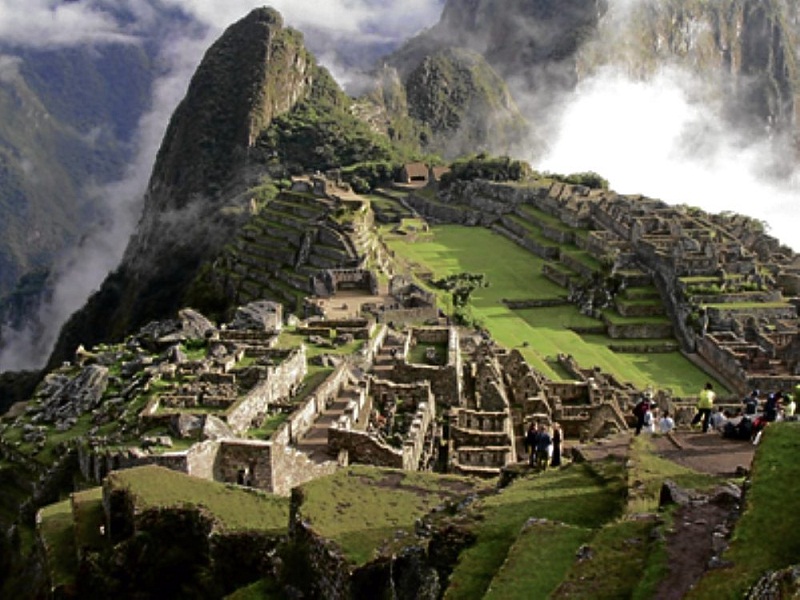
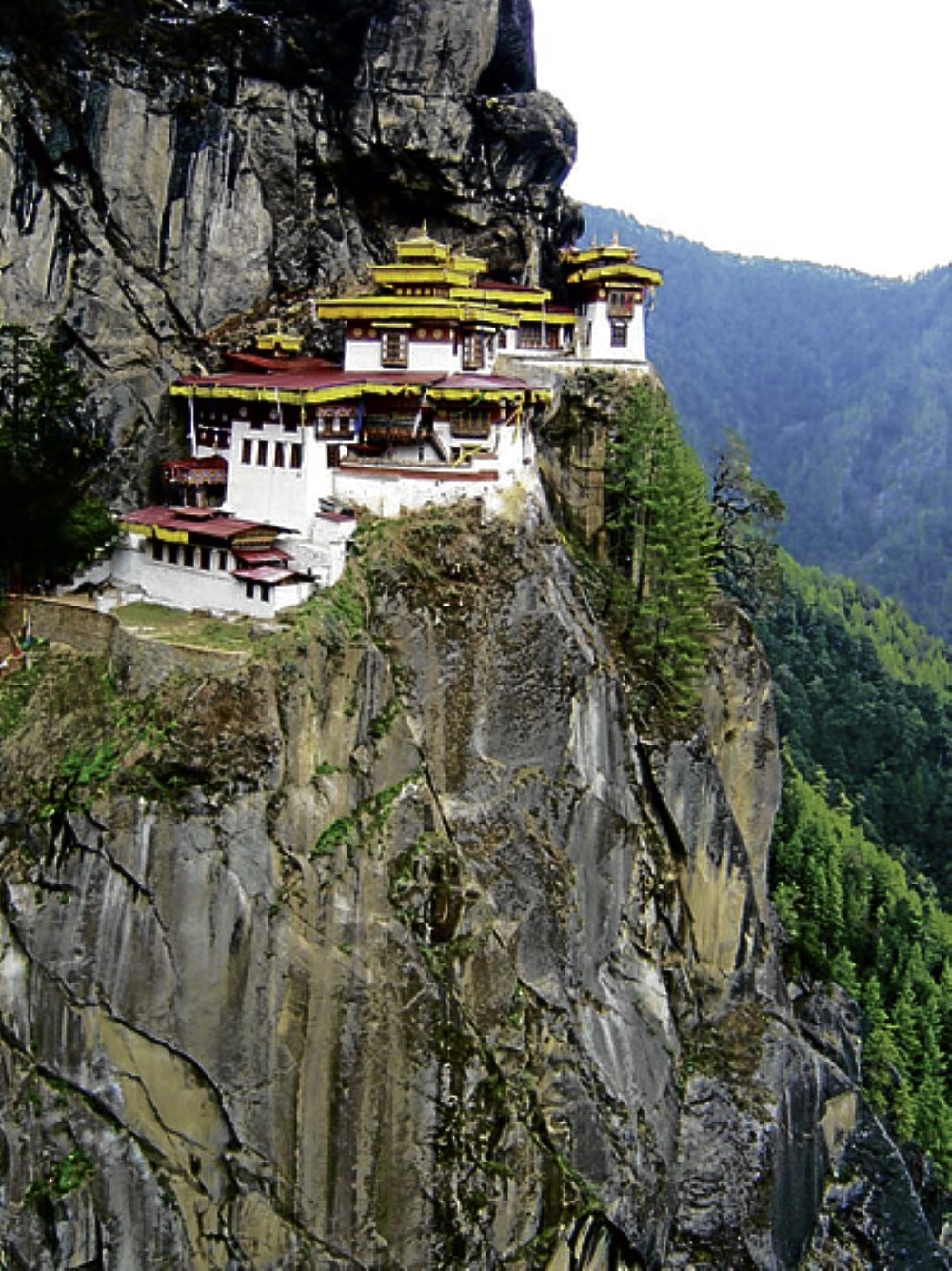
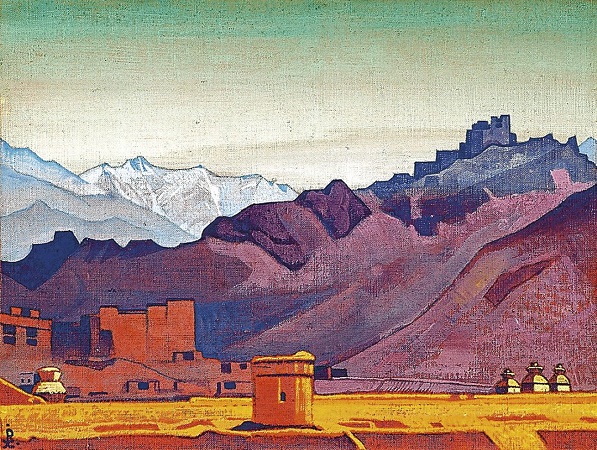 Rummaging through the bins of a second-hand store in Makati, I came upon a volume with a curious title: ” Imagining Tibet.” That’s when it struck me that, indeed, the Land at the Roof of the World is a place that exists not only on this planet but in our minds. The 1957 book by Peter Goullart, “Forgotten Kingdom,” and the more recent “Searching for Shangri-La,” by Laurence Brahm (published in 2003), are additional examples which show how this entire region has been mythologized by writers from the West. The lovely paintings by the Russian mystic Nicholas Roerich of lonely citadels set in an expanse of mist shrouded peaks also helped to further enhance European fascination.
This fascination probably has something to do with the Dalai Lama himself. After all, the idea of how he was selected by searching throughout the land for the new incarnation of the departed ruler is truly enchanting. I suppose in an increasingly callous era, such a magical way of choosing a leader is certainly worth a pause.
In my case, this mountain realm first entered my imagination through a beloved comic book, “Tintin in Tibet.” As it turns out, this particular adventure is the favorite of many other fans of the young reporter. A friend of mine theorizes that this is because the story involves a selfless rescue in a faraway land. There is a journey on the icy slopes of the Himalayas, the weird but ultimately very human “migou,” or Abominable Snowman, the unfathomable wisdom of the grand abbot, and the encounters with other forms of knowledge that took in stride clairvoyance and levitation.
 Then again, as the tale of Tintin and his partner, Captain Haddock, unfolds, one glimpses in the colorful illustrations the solid square buildings whose interiors were brightened by rich textiles and polychrome statues. There were the sacred monuments known as “chortens,” or stupas, which held the relics of holy monks. One can even share in the sense of relief which the characters in the book must have felt when, after being knocked out by an avalanche, they awoke inside a monastery. All this made for an enchanting read, adding more images to the world’s concept of this fabled place.
Given my early exposure, it was with a child’s joy that, while exploring the Eastern flank of what had once been part of the ancient territory of Tibet, I realized that I could recognize my surroundings. The building silhouettes and the architectural details, the window shapes, even the brightly colored furniture and sculpture—all these were familiar to me because of Tintin.
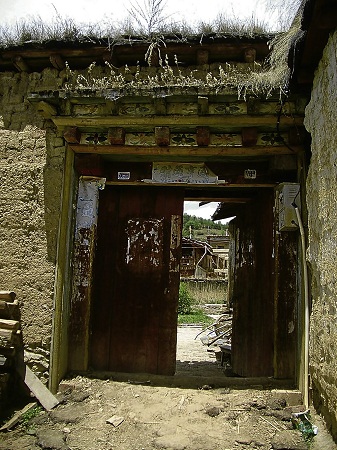
We were exploring Dukezong, the heritage quarter of Zhongdian, a town that had once been an important outpost on the traditional trade routes between China and the Himalayan kingdoms. Our host took us inside an old Tibetan house, entering through a crumbling gate that was overgrown with weeds. The interiors were quite dim yet I could still make out magnificent murals depicting the sacred symbols associated with the Buddha.
Outside, the district was all abuzz with many fashionable tourist establishments. One café-gallery we entered preserved the same homey feel of the antiquated house we saw. The wooden furnishings were lovingly preserved so that one could relish the time-worn textures which contrasted with the jolting colors of the throw pillows.
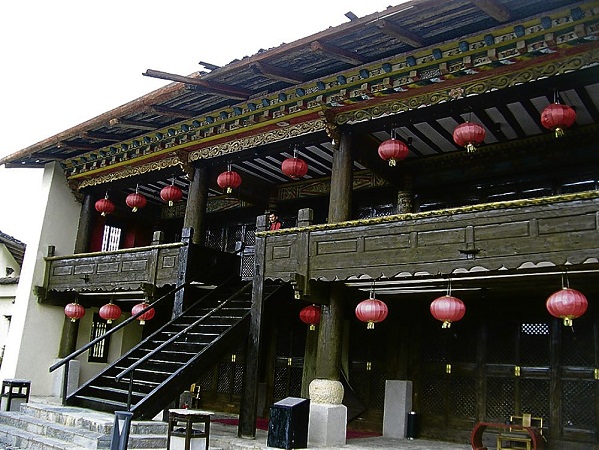 In our host’s office we saw the same technique of introducing traditional touches into contemporary settings. The meeting room had a canopy and curtains festooned with the same sacred symbols we had seen in the residence. When I mentioned that the tranquility of the chamber made it the perfect place for conferences, our host explained that the decorative scheme was inspired by his advocacy to safeguard the historical dimension. For centuries, the cold stone spaces of Tibetan structures were always softened by draperies—reminding the occupants of a nomadic past lived out in tents made more habitable by blankets and carpets.
I would notice this same concern to marry the traditional with the contemporary in the Banyan Tree Resort in nearby Ringha. The setting alone is already so emblematic of the region. One drives through sleepy villages and mountain valleys dominated by distant snow-bound summits. I was reminded that this is the land that the great botanist Joseph Rock had come to love during the years he spent here searching for plant specimens.
The area has some of the richest bio-diversity in the planet because of the various micro-climates created by the varying altitudes. For this reason, I even suggested that the resort could offer flower-collecting expeditions where guests could go out into the surrounding countryside accompanied by experts to learn about the unusual flora. Non-endangered examples could then be collected and, after a blossom-pressing or drying workshop, transformed into quaint cards or frames.
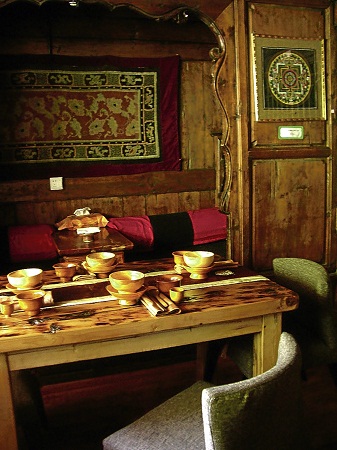
Entering the Banyan Tree, I felt that I had simply wandered into another section of one of the villages I had just visited. As one of the resort owners explained to me, they had dismantled abandoned vernacular houses and moved them to the site. It was actually more cost-effective to do this since buying fresh materials to erect an entirely new building would have been much more expensive. What gave the resort a sense of cohesion, though, was the fact that the houses had come from the same locality and were stylistically related to each other.
I was amused to spy about the grounds the huge racks which the villagers would use to dry corn or peppers. An administrative office was even set up in a tent. I noted, too, that the entrance façade of the spa was exactly like that of the house in Dukezong, but it was livened up with jaunty lanterns. Meanwhile, the guest cottages had gates that would have fit right into any streetscape in the region.
The bedrooms once again featured brilliant fabrics juxtaposed with gnarled beams. Beautiful thangka-like paintings were everywhere adding a meditative salve to the already soothing interiors. I noted interesting innovations such as drums used as side tables and a huge wooden bucket fashioned into a soaking tub. I was happy to learn that the restaurant menu featured an adaptation of my favorite Tibetan dumplings whose name I find inexplicably comforting: momos!
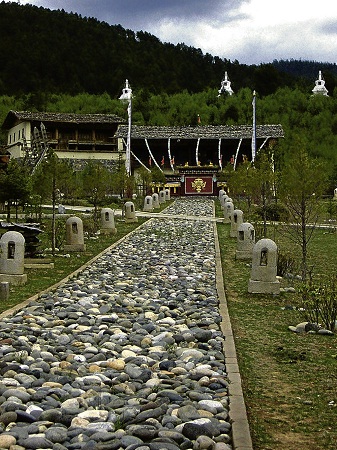
What impressed me most though were the elements that spoke of a more spiritual dimension. The paths that connect the guest cottages are not smoothly paved but covered with large stones rounded from having spent an eternity at the bottom of rushing alpine streams. Since it is not easy to walk on these uneven surfaces, one is initially puzzled: why had such an inconvenience been introduced? Then one realizes that these unusual paths allude to the deep spirituality of the Himalayan peoples.
All throughout Tibet, pilgrims come to sacred spots to pray and perform rituals. One remarkable practice is to circle a holy site while remaining completely prostrate. What makes this especially difficult is the roughness of the terrain which is filled with skin-piercing rocks. There are also the great distances involved: sometimes what is being circled is not just a temple, but in the case of Mt. Kailash, an entire mountain.
Interestingly, the whole Banyan Tree compound is dominated by a ridge on which the developers had built three chorten. These were eloquent indicators that though this may be a plush resort, it was also a sanctuary, an integral part of a magnificent land that had endured so much through the centuries.
Some may find the use of religious imagery in resorts inappropriate. There have been whole discussions on how tourism can commodify even what is sacred. For me, though, I am grateful for the reminder that travel is not just about pleasuring the body but also about nourishing the soul.
The writer would like to thank Lorenzo Urra of Global Nomad for recommending the Banyan Tree in Ringha
When in Cebu City, please visit gregmelep.com for your real estate and retirement needs.
When in Cebu City, please visit gregmelep.com for your real estate and retirement needs.