Showing posts with label iloilo. Show all posts

Wednesday, June 29, 2011

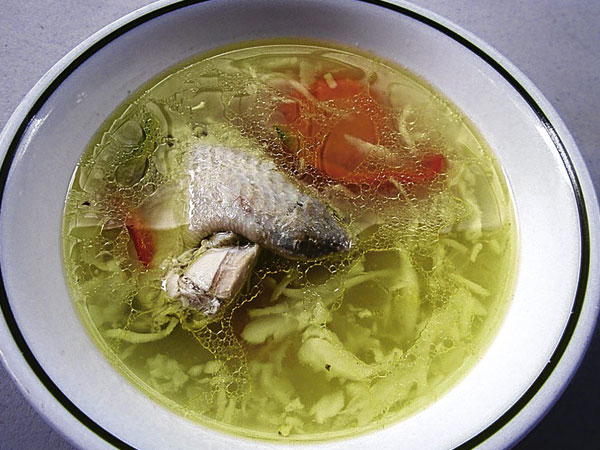
Chicken ‘binakol’


Like all Ilonggo cooking, this soup has the taste of Old World cooking– hearty, rich, flavorful

By: 
Philippine Daily Inquirer

Iloilo is one province that can rightfully be proud of its cuisine. Its rich culinary heritage includes the finest examples of regional dishes: spring rolls with fillings of julienned hearts of palm (fresh lumpiang ubod); charcoal-grilled chicken marinated in spicy vinegar (chicken inasal); chicken soup with dumplings (pancit molo); and noodle soup of pork broth topped with bits of fried garlic, chopped spring onions and crumbled chicharon (batchoy).
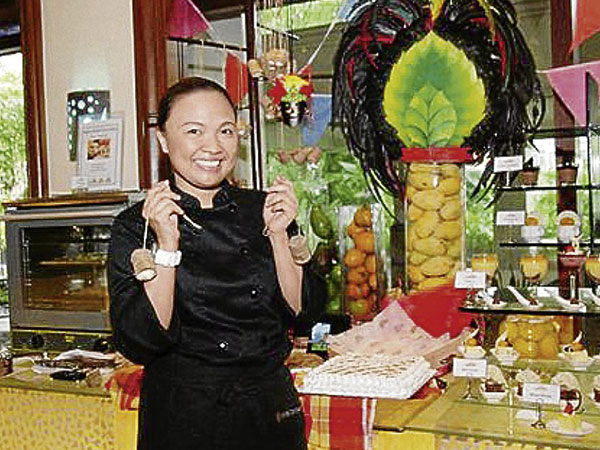
Until June 26, Café Jeepney in Hotel InterContinental is serving many of these Ilonggo dishes in its lunch and dinner buffet. Supervising their preparation is Chef Pauline Gorriceta-Banusing, an Iloilo native who has studied in the best cooking schools in the US.
“They’re mostly heirloom recipes that have been with Ilonggo families for years,” she says of the tempting parade of dishes on the buffet table. And, indeed, Iloilo cuisine has the taste of Old World cooking—hearty and rich, with the flavors skillfully coaxed and harmonized through long hours of marination, or slow, patient simmering, or with the diligent use of the freshest ingredients.
According to Pauline, Ilonggos tend to be clannish, not just in terms of family heritage but also when it comes to home cooking.
“Each clan thinks their dishes are the best,” she says. Moreover, she adds, Ilonggos prefer provincial home cooking over other, more sophisticated food. Their idea of a festive spread, for instance, is simple everyday fare prepared by the family cook.
“Their fiesta table would usually just have KBL (kadyos, baboy, langka) pinamalhan (salmon cooked in vinegar) and chicken binakol (chicken-coconut soup).”
Iloilo being a coastal province, it’s also known for its seafood. On the buffet during the press lunch was a special kind of clams which Ilonggos have named centennial shells because they first showed up in the seawaters during the celebration of the Philippines’ centennial year. With rough shells and a strange appearance, they looked like a cross-breed of scallops and oysters, and were just as delicious as both bivalves. To make sure they would be served fresh for lunch that day, “someone swam in the sea this morning to gather them,” says Pauline.
Because sugar is a major crop in their province, Ilonggos also love baking sweet delicacies. Truly a novelty is pulot, a thick, dark-brown liquid that’s a combination of muscovado sugar and coconut milk. It can be spooned directly from bamboo barrels and eaten as is, or one can use it to sweeten coffee. Even more enticing is yema cake, with an egg-yolk base as thick and gooey as the candy, topped with swirls of frothy white icing.
Here’s Pauline’s recipe for one of Iloilo’s famous soups, chicken binakol. While it’s traditionally cooked in bamboo segments, Pauline says it can be cooked in a casserole as well. (Iloilo cuisine is served as part of the lunch and dinner buffet at Café Jeepney until June 26. For reservations, call 7937000.)
Chicken Binakol
The base of coconut juice makes this an unusual soup, being rather sweet instead of savory. Once the soup is fully cooked, the strips of coconut flesh will resemble short noodles, adding richness and texture to the dish.
Makes 4-6 servings
For the coconut meat and juice:
4-5 whole young coconuts (see tips)
For the chicken:
1 k chicken, cut into serving pieces
1 onion, chopped
2 stems lemongrass
1 chicken broth cube
Salt and pepper, to taste
2 carrots, cubed (optional)
1 bell pepper, cut into strips (optional)
Prepare the coconuts:
Pour the juice from the coconuts into a large bowl and measure enough to make 6 cups. Scrape out the flesh from 3 of the coconut shells. Set aside.
Cook the chicken:
In a large casserole, put the chicken, onion, lemongrass and chicken broth cube. Pour in the prepared 6 cups of coconut juice and the coconut meat. Bring to a boil and simmer until chicken is tender, around 20-25 minutes.
Season to taste with salt and pepper. If using carrots and bell pepper, add them during the last 5 minutes of cooking. Transfer to a soup tureen or ladle into individual soup bowls and serve immediately.
(For more recipes, tips and stories, log on to www.normachikiamco.com. Or visit author’s fan page, www.facebook.com/
normachikiamco)
Cook’s tips:
Whole young coconuts are available in the wet markets and in Landmark, Rustan’s and SM supermarkets.
When scraping the coconut flesh from the shells, do not scrape too deeply so as not to include the brown husk.
If desired, reserve the empty coconut shells and serve the soup in the shells.
Cut the lemongrass stems into shorter pieces if they’re too long. Since these are used only to add flavor and fragrance and are not to be eaten, you can remove them from the soup before serving.
Instead of a whole chicken, you can also use your favorite chicken parts such as drumsticks and wings.

Friday, March 11, 2011

Traveling A-Z: Iloilo


By Vince G. Lopez

 Known as the gateway to Western Visayas, the province of Iloilo is famous for its old churches, historical sites and colorful celebrations. Pristine beaches and verdant forests as well as other natural wonders can also be found in Iloilo as it is located in one of the most naturally blessed regions in the country.
While such architectural and natural wonders abound in Iloilo, it’s the local delicacies that always leave a lasting impression on tourists. These delicacies are usually tried by tourists during their visit for the famous Dinagyang Festival.
Dinagyang, which is one of the most famous festivals in the country, is a celebration of the arrival of Malay settlers in the island. The said festivity is also the Ilonggos' way of showing their devotion to the Sto. Niño. The colorful celebration also shows the unity among the number of tribes within the province since the arrival of other native settlers.
As one of the highly urbanized provinces of the Philippines, getting around the towns of Iloilo is very easy. Seeing the majestic old churches and architectures of cultural importance is easy with the province’s transport system. But beyond the urbanized province is the warmth of locals willing to show the way to their beloved tourist attractions.
Fast facts
Local Dialect: Hiligaynon
Festivals:
• Dinagyang Festival – The province’s largest celebration which is held every 4th weekend of January.
Must See:
• Miagao Church - One of Iloilo’s most famous landmarks which was built in 1786. This icon of Iloilo is also recognized as a UNESCO World heritage site.
• Molo Church - The 16 images of female saints inside the church, as well as its awe-inspiring gothic-renaissance architecture, make it one of the most interesting churches in the province.
• Iloilo Riverside Boulevard – The perfect place for a leisurely stroll in the city which features a great view of Iloilo River.
• San Juaquin Beach – Famous for its pebbled shore, the beach is a great diving spot with its diverse marine life beneath its crystal blue waters.
• Mariit Conservation Park – Located in brgy Jayubo, the park is home to endangered animals native to the province including the endemic Hornbills and the Visayan Spotted Deer.
• Bulabog Putian National Park – The 30 caves within the park plays an important role in Philippines history as it became the revolutionaries' dwelling place during the war.
• Agho Island – A small parcel of paradise in the province of Iloilo as it contains extensive white sand beaches and coral gardens.
How to get there:
The province of Iloilo has an International airport where local and international flights going into the province touch base on a regular basis. Traveling by sea is also possible through Iloilo’s Port as well as another port located in Panay Island
.

Friday, September 10, 2010

Union of batchoy and inasal creates a business boom


By Corrie Salientes-Narisma
Philippine Daily Inquirer

WHILE MANY restaurants in the metropolis serve batchoy as part of their regular fare, people at Deco’s Original Batchoy insist that what others offer are not the same as Deco’s.

Chinese Merchant Families of Iloilo: Commerce and Kin in a Central Philippine City


“Not all batchoys are created equal,” they claim, adding that the one served at Deco’s is different and better.

Deco’s “invented” batchoy, they say, and as such, it offers much more than a delicious treat of clear soup with noodles and all those toppings. With every bowl of batchoy served at Deco’s comes a glimpse of history of this Iloilo specialty and more.

The batchoy we know today has come a long way and has undergone various modifications from the batchoy that a young butcher named Federico Guillergan Sr., or Deco, started in 1938 in a carinderia at the La Paz public market in Iloilo City.


Beginnings

It started as a simple soup made of meat stock garnished with local herbs and spices. It was an instant hit. People trooped to Deco’s carinderia for the soup. Later, it attracted the huge Chinese population of the city, who joined the flock that patronized Deco’s makeshift eatery in the public market. To cater to the Chinese market, noodles were added.

This offering had no name, so whenever Deco was asked about how the bowl of soup with noodles was called, he would just answer batchoy which, in Chinese, simply means meat soup. The name stuck and was used by all the other restaurants that offered this Ilonggo specialty. Some call it La Paz batchoy as it started in La Paz, Iloilo.

The “inventor,” Deco Guillergan Sr., is long gone, but his legacy lives on. And despite the proliferation of restaurants that offer batchoy, his original La Paz batchoy remains a cut above the rest, preferred especially by patrons with discriminating taste.


New phase

An enterprising Ilonggo businessman, Edgar J. Sia, who is better known for his Mang Inasal fast-food chain, had always wanted to go into “batchoyan” but he knew it was difficult to start from scratch. Deco’s Original Batchoy attracted his interest and he decided it would be a great product and brand to carry in line with the expansion of Sia’s Injap Investments Inc.

Sia hooked up with Federico Sr.’s four children and the alliance started. The original batchoy recipe of Deco’s remained a “heavily guarded secret,” so the eldest of the brood, Federico Jr. or Nonoy, joined Sia and is now the food consultant at Deco’s. The 70-year-old Nonoy oversees Deco’s commissary in Iloilo and makes sure everything remains true to the original.

Deco’s was folded into Sia’s Injap Investments. The first item on its agenda was to put up more Deco’s restaurants in Iloilo and neighboring provinces in the Visayas.
There are now six Deco’s restaurants on the island, all under Injap, except the original which the family of Guillergan Sr. decided to keep.


Batchoy in the city

The 33-year-old Sia felt that Deco’s batchoy had to be brought to Metro Manila and other key cities in the country to bring the original batchoy within the reach of consumers outside the Visayas.

“The plan is to package Deco’s in tandem with Mang Inasal. He intended to go full blast with Deco’s expansion when demand for Mang Inasal outlets starts slowing down,” says franchise manager Meryl Aniñon.
However, the very first Deco’s in Metro Manila, according to Aninon, was not really planned.

Mang Inasal got a corner space on the ground floor of the then newly opened Alphaland Southgate building on the corner of Edsa and Pasong Tamo. According to Aniñon, Injap found the space too big for Mang Inasal, so Sia decided to make use of the extra space in the area to introduce Deco’s to the Metro Manila market.

This was not the first time Deco’s reached out to the market in Manila. In 1967, Nonoy brought the original batchoy—prepared the way taught to him and his siblings by his father—to España in Manila when he put up a dormitory near the University of Santo Tomas.

For 30 years, Deco’s on España was home to thousands, mainly students, and those lured by the inviting aroma of Deco’s batchoy. In 1997, though, both the dormitory and Decos closed shop.
Modern outlets

With Injap, the reentry of Deco’s into the Metro Manila market and other key cities in the country, as envisioned by Sia, will make a big wave.

While keeping the original taste of Guillergans’ batchoy, Deco’s offering is now served in more modern restaurants and comes with lots of toppings and add-ons—“bottomless” kaldo or broth, crispy chicharon, garlic and onion.

The Deco’s in Alphaland opened in August last year. It was followed in June by Deco’s Savemore in Novaliches. It will soon open on Taft Avenue in Manila, Tomas Morato in Quezon City and in SM Baguio. More will be opened soon either by Injap, itself, or by franchisees.

Sia targeted to put up 30 Deco’s restaurants this year, in time for the expected tapering off of the demand for new Mang Inasal outlets.

“He thought demand for Mang Inasal would start going down when the number of outlets reaches 250. But he was wrong. We have reached 250 and we are constructing 30 more Mang Inasal outlets,” Aninon says.

With his hands already full with the expansion of Mang Inasal, the plan for Deco’s was slightly modified.
“Deco’s expansion is ongoing and it is expected to go on at a faster pace soon,” says Aninon.

Published in Philippine Daily Inquirer August 15, 2010