Agence France-Presse
NEW YORK—Fears of a new recession have wiped trillions of dollars in value from global stock markets in recent weeks and sent investors scurrying to assets they view as less risky.
But are “safe havens” like gold really safe? Here are several of the refuges where panicky investors have been shifting their portfolios amid the market turmoil, and the pluses and minuses of each:
GOLD: The price of gold, a time-honored store of value, skyrocketed to a new record of $1,878.15 per ounce on Friday, and some analysts say it could go above $2,500 this year.
The World Gold Council, an industry body, predicts that strong demand in India and China will continue to prop up the gold market this year.
“A developed world with slower growth, a large fiscal deficit and near zero rates over the next few years, inflationary pressures in emerging economies, and larger political and economic uncertainty bodes well for history’s oldest form of wealth,” Barclays Capital said.
Skeptics argue that gold has little inherent value and is vulnerable to sudden drops in price. In the two decades before 2003, its price was essentially flat, mostly hovering between $300 and $400 per ounce.
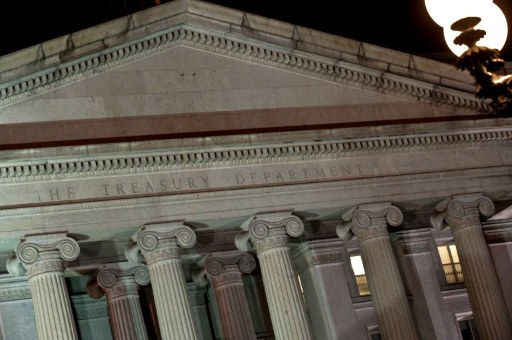
U.S. TREASURIES: US government debt has long been seen as “risk-free,” and paradoxically this has remained the case even after Standard & Poor’s downgraded the United States this month.
Prices have surged in recent weeks, as spooked investors bought Treasury debt on which yields had fallen virtually to zero percent, or a loss if measured against inflation.
The 10-year bond dropped to a record low of 1.974 percent on Thursday, before pushing back just above the 2.0 percent line.
“It wouldn’t shock us to see another quick sharp move and then staying under two percent especially if the eurozone issues worsen,” said George Goncalves, head of US rates strategy at Nomura.
But he cautioned that the bond rally might lose steam: “We believe that the majority of bond market gains are behind us,” Goncalves said.
SWISS FRANCS: Switzerland’s currency has proved a popular safe haven for those who fear their dollars or euros will fall due to stagnant growth or possibly inflation.
Over the past year, the Swiss franc has gained more than 30 percent against the dollar and over 16 percent against the euro.
However, this month Switzerland’s central bank began intervening to halt the rise of the currency, tarnishing its appeal as a safe haven.
JAPANESE YEN: Japan’s currency hit a post-World War II record of 75.95 yen against the dollar on Friday, even though Japan has vowed to contain the rise of the yen to protect its vital export sector.
“There is no reason that the yen should be regarded as a flight-to-safety currency,” Takehiko Nakao, Japan’s vice finance minister for international affairs, told Dow Jones Newswires on Friday.
THE VIX: When markets are fearful, one of the best investments may be to buy fear itself – contracts tied to the Chicago Board Options Exchange Market Volatility Index, better known as the VIX.
Often called the “fear gauge,” the VIX is a measure of the volatility of the S&P 500 stock market index and tends to spike when investors think a crash is imminent. It jumped 35 percent during Thursday’s big sell-off.
Not a safe haven in the traditional sense, sophisticated investors use VIX derivative contracts to protect themselves from volatility.
Trading in VIX-related contracts “exploded in volume” in the past two weeks, said Adam Warner, an options analyst with Schaeffer’s Investment Research.
US FARMLAND: Some say the most reliable way to hedge against catastrophe can be to buy US farmland, which has surged in value this year as food prices have soared and bad weather has tightened the global food supply.
The value of farm acreage in the five US midwest farm states grew 17 percent in the second quarter of 2011, its largest year-on-year increase since the 1970s, according to the Federal Reserve Bank of Chicago.
“Since the financial crisis, we’ve seen investor interest rise every year,” Stephen Johnston, chief investment officer for Agcapita, a Canadian farmland investment fund, told AFP.