Showing posts with label catanduanes. Show all posts

Tuesday, November 13, 2012

Wind-swept, captivating Catanduanes


All around are greenery, cloud-draped mountains, a long coastline, rock formations, beach resorts, historical churches and caves

By 

The tall tale is that the men of Spanish conquistador Juan de Salcedo were pursuing pirates operating in the Bicol Peninsula in 1573, whereupon they came to the dwelling place of a Datu and his family living in a place filled with flowers.
The flowers were called “burac,” subsequently changed to “birac.” And that is how the area became Virac, the capital town of Catanduanes.
Wind-swept, captivating Catanduanes, a big island province known for its frequent storms emanating from the Pacific Ocean and Puraran Beach, a byword among Filipino and foreign surfers, is easily among the most scenic provinces in Bicolandia, a region known for its natural beauty.
The province is a three-hour ride via Ro-Ro vessel from the Bicol mainland, entry point being the Port of Tabaco City, Albay.
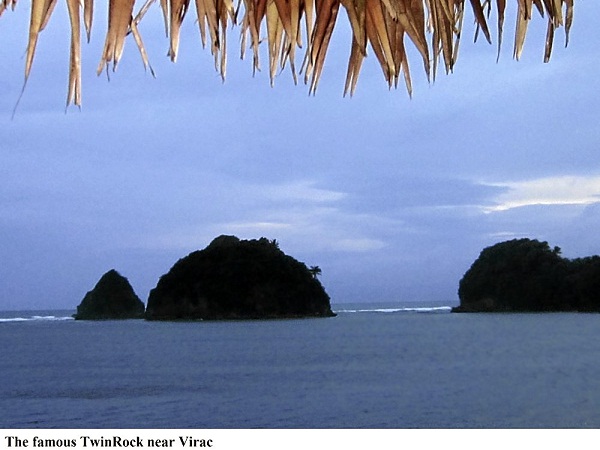
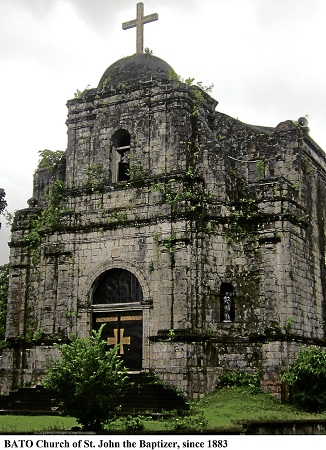
All around are greenery, cloud-draped mountains, a long coastline, rock formations, beach resorts (check out TwinRock), two historical churches (the Virac Cathedral and the enchanting St. John the Baptizer Church in Báto, near Virac, circa 1883); and caves, including Luyang Cave in San Andres, “where natives were choked to death by Moro pirates in the 17th century.”
Places to stay in Virac include Rakdell Inn, Marem Pension House, Midtown Inn and Rhaj Inn Apartelle.
The provincial Governor is Joseph C. Cua, and Vice-Governor is Jose Teves Jr.
Representing the lone district of Catanduanes is Rep. Cesar Sarmiento.
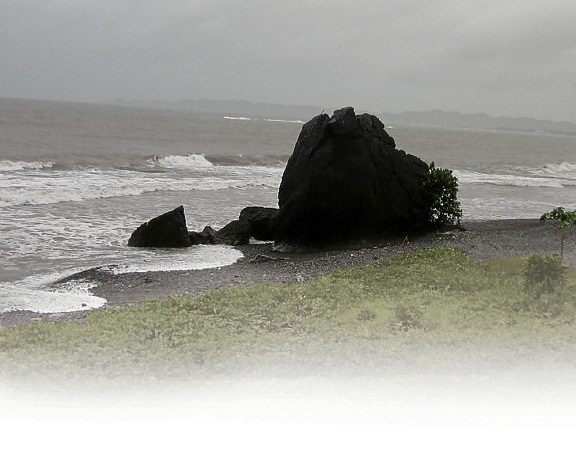
ROCK formations
Catanduanes recently put its best foot forward with the month-long Catandungan Festival 2012, its 67th Foundation Anniversary. The slogan was “Sulong Catandungan sa Matanos ng Dalan,” a takeoff on President Aquino’s “daang tuwid” (Forward Catandungan on the Straight Path).
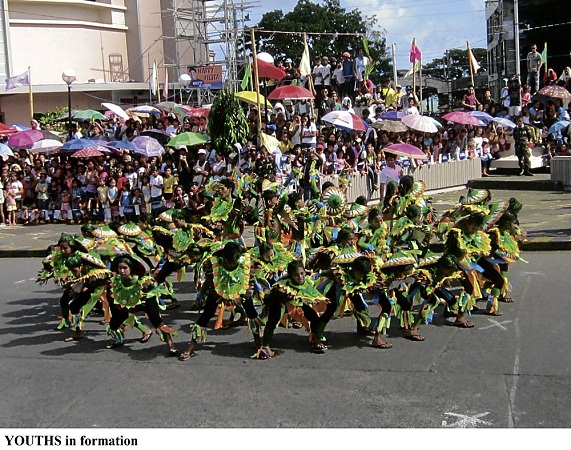
Highlights were a Kundiman Fiesta, streetdancing by schoolteachers and students capped by a “Festival of Festivals/Showdown.”

Experience a luxurious and comfortable life + affordable rates and plans. Click here.
To the strains of a traditional Bicolano song, the men and women teachers from the different towns of the province danced the Pantomina, a traditional marriage and courtship dance. There was graceful movement of the hands, the women demure, and the men forceful when the choreography demanded it. There were chants, elaborate bows and mock chases.
In a real wedding reception, the guests were expected to shower money on the happy, dancing couple.
The street dancing of the students was understandably more energetic- frenzied at times—and served as an appetizer for the “showdown.”
With giant props, full costume regalia, drums and bugles, and icons of Mother Mary and the patron saints, the seven contingents showcased their dancing skills as well as the produce of their town (as in abaca, rice or crabs).
They performed key and lively segments from their respective town festivals.
Two contingents—from Viga, the defending champion, and Gigmoto—were nothing short of spectacular. As a judge, I gave slightly more points to the contingent from Gigmoto, if only because of the skill of their dancers and gymnasts.
The other jurors, however, gave the nod to the team from Viga.
My first-ever trip to the off-the-beaten track province of Catanduanes was arranged by the Provincial Tourism Office headed by Carmel Bonifacio-Garcia (0929-3998437). Email tourism_catanduanes@yahoo.com. Bicol Isarog (call Robert, 0917-5939811) has daily trips from Metro Manila (Cubao and Alabang) direct to Virac. Cebu Pacific flies three times a week to Virac.
When in Cebu City, please visit http://www.gregmelep.com for your real estate and retirement needs. Avail of the opportunity to own a condominium unit in Cebu City at the low amount of only P 9,333.33 and House and Lot @ P 7,306.81/month only. Hurry while supply of units still last. Just call the Tel. Nos. shown herein: (053)555-84-64/09164422611/09173373687.

Monday, August 29, 2011

Crab Capital


Crab Capital

By JULIUS P. VICENTE

MANILA, Philippines — Time stands still as soon as you set foot on the rustic island of Catanduanes.
Visitors to the island feel like they have travelled back in time because this slice of island paradise remains concealed due to its geographic location. Catanduanes is located in the easternmost part of Luzon and is isolated from the Bicol peninsula.
Even though the province of Catanduanes has a small land area of about 1,511 square kilometers, with 11 municipalities and 315 barangays, it has a large potential for eco-tourism. Nature has blessed the province with a long coastline and dazzling mountainous terrain.  
What To Do
Go beach-hopping. Try Puraran Beach in Baras which is known to surfers, both local and foreign, for its breathtaking waves that look like a long barrel of surfs. Waves are best in shape during the “ber” months as the town folks suggest.  
A must-see are the beaches in Igang, Virac. Twin Rock Beach Resort has two magnificent giant rock formations that are ideal for kayaking and spear fishing. Viracnons call the twin rocks as the two sentinels of the sea.  
Visit Catanduanes’ historical site — the Luyang Cave located in San Andres.  The cave was the hiding place of natives during the 17th century when Moro pirates attacked the island.
Go church-hopping as Catanduanes boasts of century-old churches, the oldest of which is the Bato Church. This 17th century church was made of coral stones and mortar and has a majestic view of the lake. The shrine of Our Lady of Sorrows in Batong Paluay in San Andres is believed to be miraculous because it grows in size every year.
Catanduanes is famous for its crabs. Kinis Festival was held recently in the municipality of Panganiban, the Mecca of crustaceans such as king crabs, mud crabs, prawns, and lobsters. Kinis means crabs in Catanduanes.
Panganiban Mayor Robert A. Fernandez expressed hope that the province of Catanduanes would be known worldwide as the crab capital of the Philippines.
Tourism Promotions Officer Carmel Bonifacio-Garcia says that through the years, the festivals in Catanduanes have evolved into bigger events to promote the tourism potentials of the island.
Mara na kamo sa Catanduanes
!

Thursday, October 7, 2010

Enigmatic Catanduanes: The Island of the Howling Winds


By Edwin Martinez
September 18, 2010, 7:23pm
Photo by Patrick Marson Ong

A group of five individuals from different walks of life recently gathered together with one purpose: To capture the beauty of Catanduanes.

An island that is often hit by storms and typhoons, Catanduanes is located in Region 5 and is accessible by air or land. The island itself has been carved by storms and has a coastline as rugged as Batanes, crashing waves from the east and still waters in the west.

Our safari was jam-packed with five days of waking up at 4:00 a.m. shooting all day with a strict itinerary, practically shooting half of the island. It was both a fun and fulfilling activity.

An hour and half from the airport, Puraran in Baras is known for its 10-foot swells.  This is a pro-surfer’s paradise, facing the great Pacific and one of the few places in the Philippines which welcome the first light of dusk. A pipeline forms approximately 500 meters from the shore. From August to November, this place is stormed by surfers from other countries because the waves during this season are simply majestic.

The only air-conditioned rooms available in the area can be found in Angie’s Bed and Breakfast, a decent resort with nice rooms and clean bathrooms. The view is breathtaking since it’s about 300 meters uphill from the shore.  Angie’s husband Lacy King is an American who fell in love with the waves of Puraran. He is a hardcore surfer, resort operator and part- time cook.

We also had a chance to meet Catanduanes Governor Joseph Cua.  On our way to the governor’s place, we stopped by Maribini Falls located in Bato. Unfortunately, it hasn’t been raining too hard in Catanduanes and the water level is low and the light is harsh.  Maribini is one of the many waterfalls that can be found in
Catanduanes.

Situated at the most Southern tip of the island is Igang. This is a perfect place for landscape photographers. With so many karsts and sea stacks, this cove is strategically positioned so that both sunrise and sunset can be shot creatively. But we only had the chance to shoot the sunrise. The most famous resort in this place is the Twin Rock Resort, with air-conditioned room, complete facilities such as a swimming pool and karaoke bar.

Catandueños are known for their resiliency.  Since the island is frequently hit by typhoons, the people would get back on their feet, rebuild their lives and move on. Just like any rural area in the country, the main sources of livelihood are fishing and farming, specifically abaca.

Transportation ranges from mini-bus to tricycle, with most of the road paved. You can easily hire a jeep or a van to discover the other wonderful coastal areas and mountains of Catanduanes.

You’ll never know. You might really hear the howls of the wind and the stories they tell.
(Special thanks to Governor Joseph Cua for his generosity and Engineer Fernan Gianan, president of the Catanduanes Camera Club for providing tips on location shots.)


When in Cebu City, please visit gregmelep.com for your real estate and retirement needs.


Published in Manila Bulletin Sept. 27, 2010.