Showing posts with label davao. Show all posts

Friday, October 26, 2012

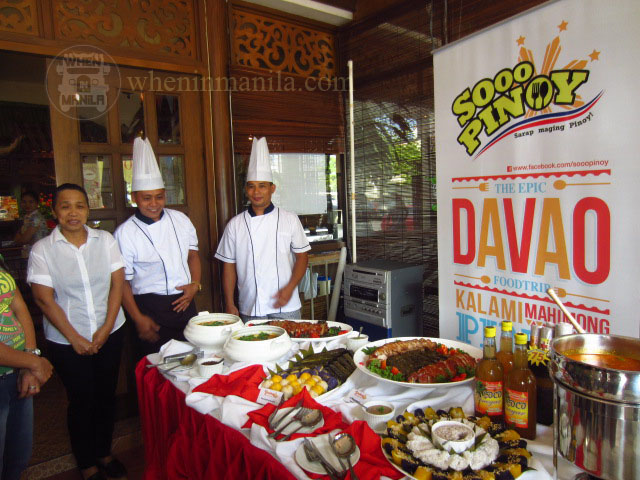
Sooo Pinoy Food Tour in Davao Day 1


When in Davao and looking for places to satisfy your cravings, here are the ultimate spots and dishes you never should miss!!!


  1. A.      Dencio’s Kamayan
-          Started in 1998 by Len Basquit and her siblings, named after their father Dencio
-          Has six branches: four in Davao; one in Tagum, Cebu; one in General Santos
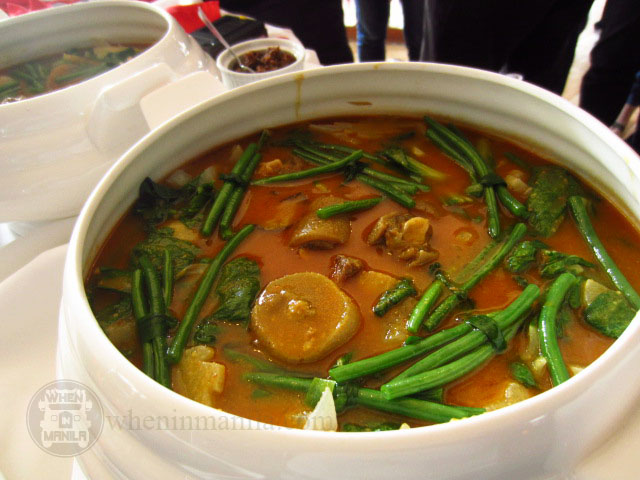
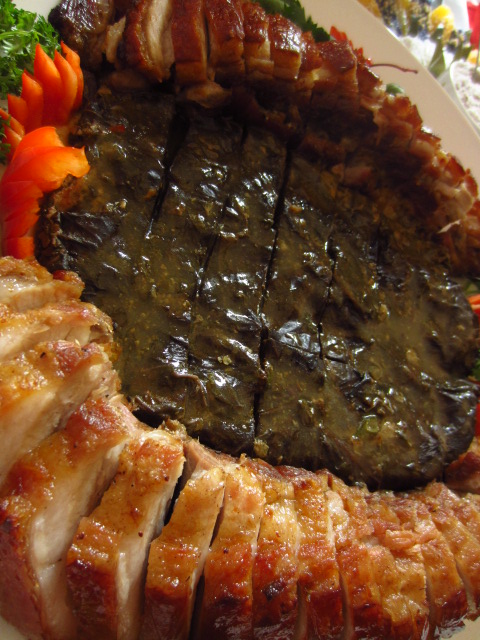
-          Other signature dishes: Pork Barbecue, Grilled Spareribs, Sari-Sari Espesyal, Grilled Panga, Sizzling Bangus Belly, Grilled Squid, Grilled Tiyan ng Isda, Kare-kare, Crispy Pata


Chicken Barbecue – chicken is marinated overnight in Dencio’s special sauce, making for flavorful skin and meat; served with atchara


 Ribs Espesyal – fall-off-the-bone tender, with sweet-barbecue glaze similar to ham; served with atchara


Pork Sisig – topped with crunchy chicharon


  1. B.      Grand Regal Hotel (Montmartre CafĂ©)  
-          Hotel built in 1998
-          Executive Chef: Chef Edgar Chavez


 Fiesta Pompano – deep-fried pompano (but fish used for the dish served during the tour was tilapia), topped with salad of green mangoes, onions, radish, cucumber, and dressed with calamansi juice, fish sauce or patis, and chili 


Grand Regal Crab with Sardines and Tomato Sauce – Crab cooked in coconut milk, tomato sauce and spicy sardines


Pork Dinakdakan – pork belly, pork brain, and pork ears with mayonnaise, chili, tomatoes, and onions


  1. C.      Barbeque Boss
-          Owned by Radley Barrientos; opened in 2002 as an eight-table restaurant at Rizal Promenade; grew into a restaurant in 2006
-          Started with pork and chicken barbecue; menu eventually expanded to include different kinds of steaks and grilled seafood
-          Named after the question asked by waiters/sellers: “Barbeque, Boss?”
-          Has four branches:  Matina Town Square; Camus Street; Damosa; E. Quirino Avenue
-          Uses bangus delivered fresh every day, sourced from Davao del Sur, General Santos, and Sarangani.


 Grilled Bangus stuffed with salted egg


 Boss Gravy Steak


Pork Barbeque – pork barbecue with sweet-spicy sauce/gravy


Steak Supreme – topped with mushrooms 


Thursday, August 23, 2012

Probinsya Restaurant Davao – Sooo Pinoy Davao Leg


Written By


Because home is where the flavor is.

kare kare, sooo pinoy davao
 Care to care for some kare-kare?

sooo pinoy davao
 Lechon kawali

sooo pinoy davao
Tsokolate-eh, tsokolate-ah? 

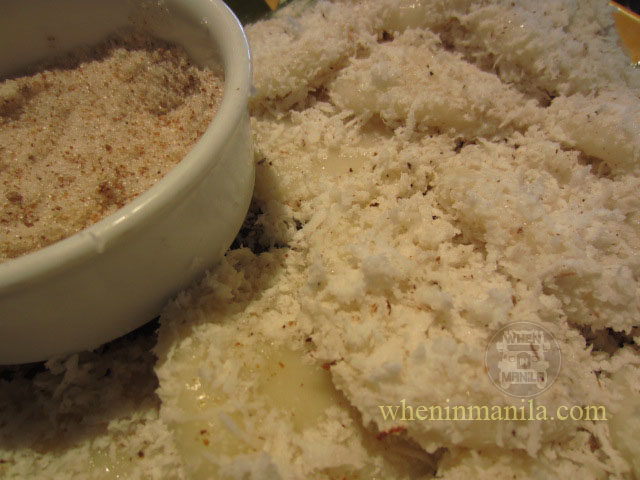
puto bumbong, sooo pinoy davao
 Puto bumbong

 When in Manila for the Sooo Pinoy Food Tour (Davao Leg)

I am not a city girl. I may have grown up in the scouts area in Quezon City, but I do not really fit into city living. I do not like busy streets, beeping cars, the maddening crowd rushing to work or filing up in train stations. I fit where it’s quiet, where there are tall trees and fresh air, where I can grow my own produce in my backyard. If only my hometown could offer me the career (and pay haha) that I have right now, I would not hesitate to move. I love the provincial life.

When we visited Probinsya restaurant in Davao for Unilever’s Sooo Pinoy food tour, it reminded me of days when we’d spend summer in Ilocos and Baguio. As a kid, I’ve always looked forward to the long vacations we’d take in my tatay’s hometown. Going home to the province meant laid back afternoons, eating mangoes and biko while playing with cousins, swimming in the river and the beach, and walking around the “city”.

sooo pinoy davao
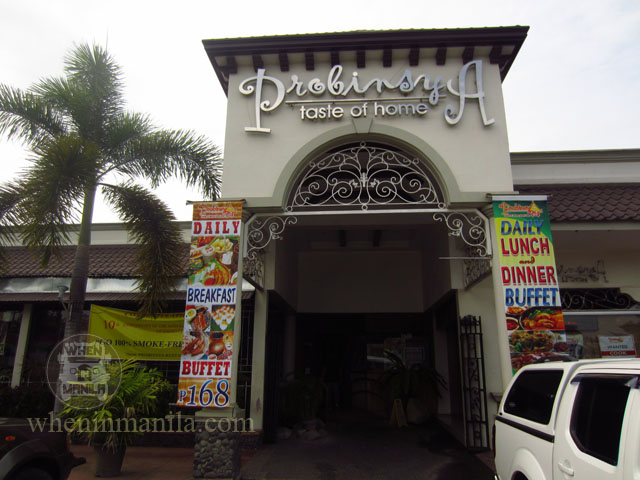
 Probinsya Restaurant Davao

sooo pinoy davao
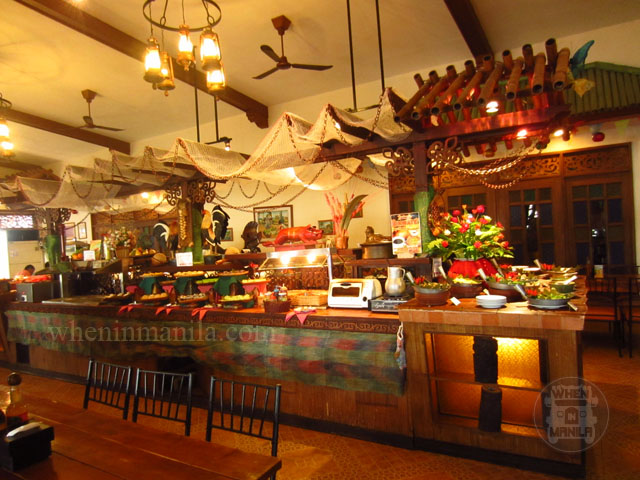
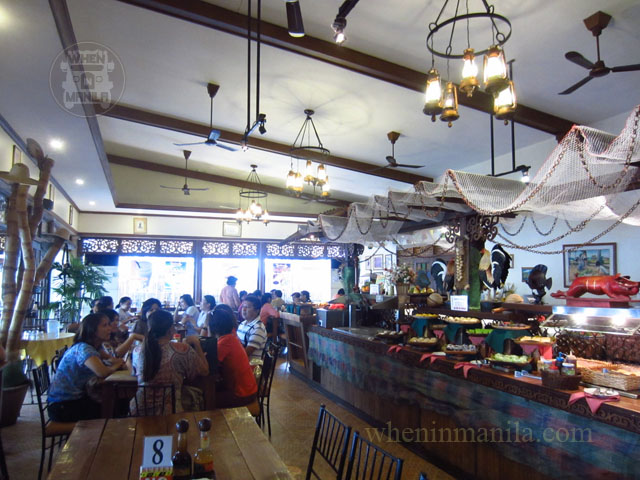
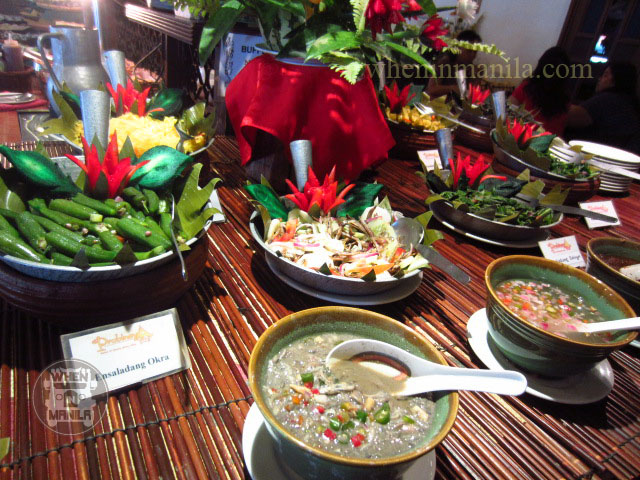
Buffet table

sooo pinoy davao
 Inside Probinsya Restaurant Davao

What is Probinsya Restaurant Davao?

Probinsya offers an extensive menu filled with homegrown dishes such as kare-kare, bacalao, and dinuguan. The flavors of the food would stand to the name of the restaurant – one bite and you’ll know you’re back at home, in your probinsya. I almost forgot to mention – they offer all of these for only PhP148. Yep. 148 Pesos for a very sumptuous and filling buffet.

The Filipino food dining experience was made complete by:

sooo pinoy davao
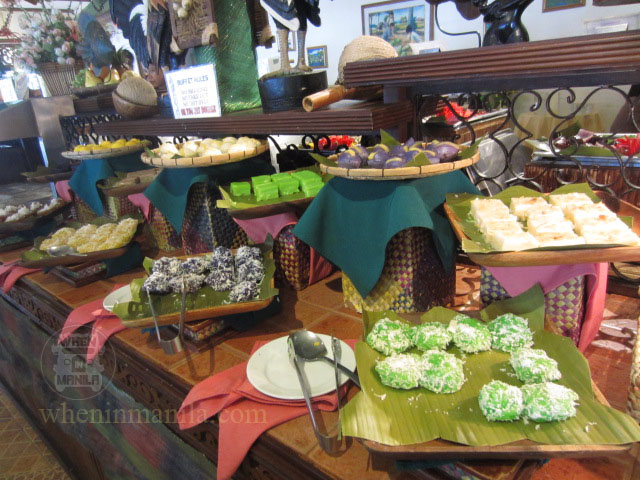
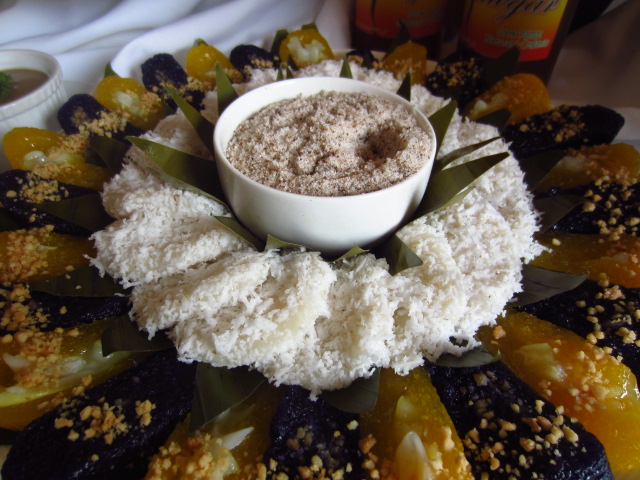
 Kakanin

sooo pinoy davao
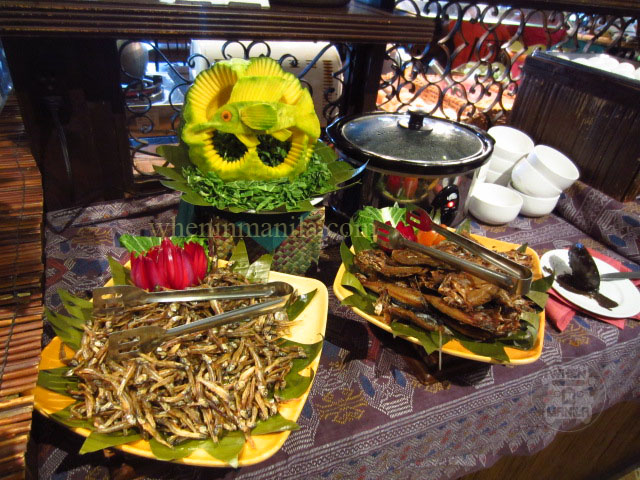
 Dried Fish

sooo pinoy davao
 Ensalada

sooo pinoy davao
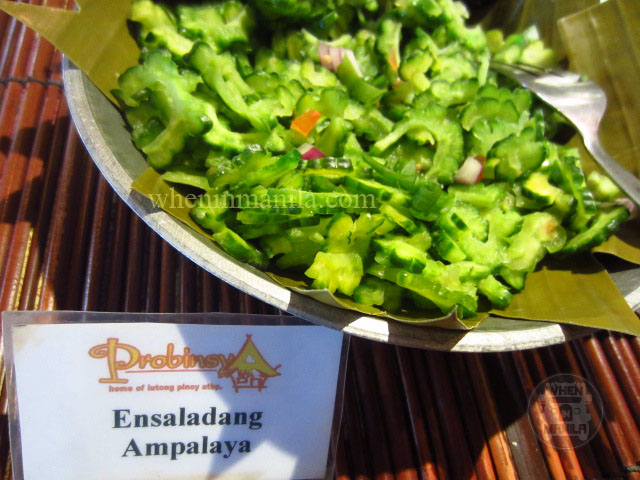
 Ensaladang ampalaya

They had  almost all sorts of kakanin (rice cakes). It was a dessert heaven for the Pinoys and Pinoys at heart.

sooo pinoy davao
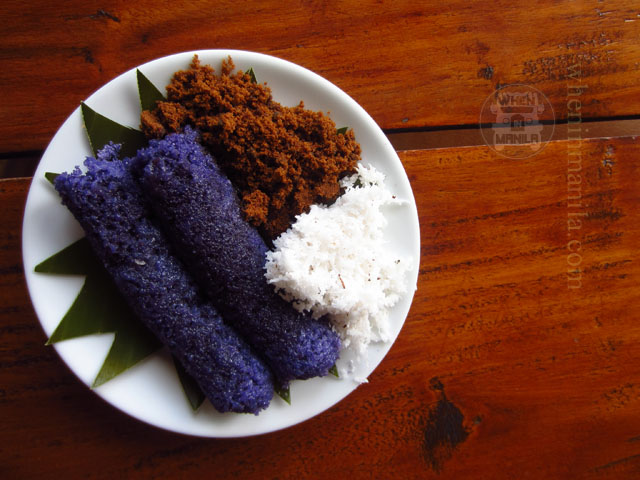
 Puto bumbong – not just for Christmas!

sooo pinoy davao
 Kakainin galore!

sooo pinoy davao
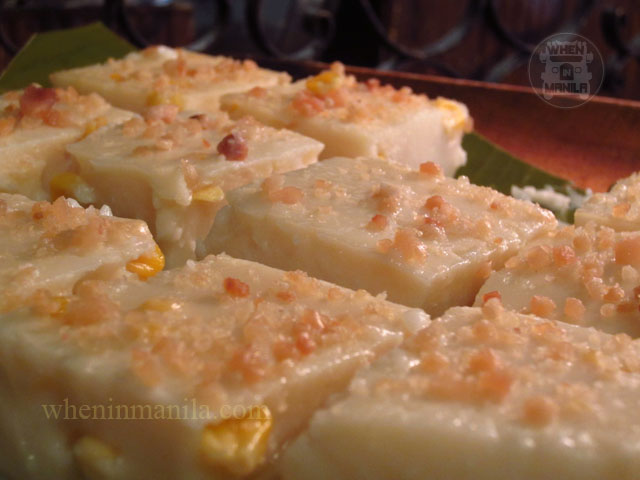
 Maja blanca

sooo pinoy davao
 Pichi-Pichi

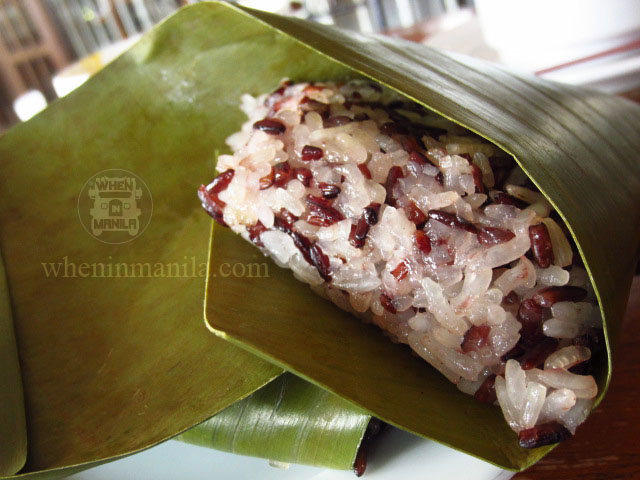
puto maya, sooo pinoy davao
 Gaya gaya, puto maya!

What’s a good meal if you don’t have anyone to share it with?

sooo pinoy davao
Meet the very warm and welcoming staff of Probinsya Davao… 

puto bumbong, sooo pinoy davao
… and ate, our puto bumbong angel.

sooo pinoy davao
Sooo Pinoy Food Ambassador Bogart the Explorer with
Unilever’s Poch and Stratworks’ Andrea

sooo pinoy davao
 The owner of Probinsya Restaurant with Melo Villareal of  OutOfTownBlog.com
 
Home is where the flavor is.
 That’s what came to my mind when I had a bite of Probinsya’s kare-kare. See, I’m a big fan of kare-kare. And when something has been tagged as my favorite, I tend to be quite too particular about it. Probinsya’s version did not disappoint me. Rather, it had set my kare-kare (from restaurants) expectations a notch higher. It was that good. Just like every other dish they have served.

sooo pinoy davao
 Lechon Kawali


balbacua davao, sooo pinoy davao
 Balbacua


kare kare, sooo pinoy davao
Kare-Kare

sooo pinoy davao
 The ultimate staple food of Pinoys – kanin!


Why Probinsya Restaurant Davao is Soo Pinoy

Probinsya offers affordable buffet meals at PhP148 for breakfast and PhP280 for both lunch and dinner. It fits the budget of the Pinoy without compromising taste nor quality.

Next time, when in
 Manila
 Davao, make sure you drop by Probinsya for breakfast, lunch, or dinner. I swear by every bite that I have taken, the flavors would take you back closer to home. With probinsya food at a probinsya price, I’m almost certain you wouldn’t be asking for more.

And when in Cebu City, please visit gregmelep.com for a more comprehensive tour and real estate deals.
Avail of the opportunity to own a condominium unit in Cebu City for only P12,000.00/month with its own parking lot. Hurry while the supply of units last. Just call the Tel. Nos. shown below.
Tel. Nos. (032)555-8464/09164422611/09435551680/09173378637


Saturday, October 1, 2011

Kadayawan goes bigger and brighter


By JOJIE ALCANTARA
MANILA, Philippines -- Davao’s major festival underwent a positive facelift this year.  With the private sector taking up the reins and, backed up by the local government, Duaw Dabaw Foundation Inc. was tasked to make sure this year’s revelry will be remembered as unforgettable again, rain or shine. True enough, no intertropical convergence zone or low pressure area could mar the new stage built for the performances that draw thousands of crowds from all Mindanao each year.
The island’s biggest and most pulsating celebration, Kadayawan sa Dabaw Festival, pays tribute to Mindanao's indigenous tribes as the focal point of the festivities. Derived from the Mandaya word “madayaw,” Kadayawan signifies anything that is of good value, meaning “beautiful, superior, or beneficial.”
Celebrated every month of August, Kadayawan sa Dabaw’s theme this year is “Ten Tribes, One Vibe,” focusing on the multicolored mix of Davao and Mindanao's indigenous communities as well as migrant settlers, whose identities make up the rich cultural heritage of this land.
Long ago, Davao’s ethnic tribes which used to reside at the foot of Mount Apo would converge in a bountiful harvest to celebrate a thanksgiving ceremony to the supreme beings. The rituals involve showcasing produce like fruits, flowers, vegetables, rice and corn grains as offering, while villagers sing and dance in gratitude to the year's abundance.
This traditional practice of thanksgiving is still being observed by Dabawenyos today, as it has evolved into the tribal festival once initiated in the 70's by former Mayor Elias B. Lopez, of Bagobo descent himself.
In 1986, after Martial Law, the government attempted to bring the people together through the “Unlad Proyekto Davao.”  A festival was initially coined "Apo Duwaling," derived from Davao’s famous icons:  Mt. Apo, the country's highest peak; Durian, the king of fruits; and Waling-waling, the queen of orchids. “Apo Duwaling” showcased the city as a peaceful destination to visit and to do business after the 1986 EDSA Revolution.
Mayor Rodrigo Duterte renamed the festival "Kadayawan sa Dabaw" in 1988 to embrace the abundance of blessings Dabawenyos were continually bestowed upon, from the bountiful harvest of flowers, fruits and other crops, to the city’s growing distinct accolades (the long list can be viewed in www.davaocity.gov.ph), and more importantly, the restoration of the peace and order.
With the young and dynamic leadership of Davao’s first lady mayor, Sara Z. Duterte, the delegation of tasks to the private sector is one way of encouraging it to fully participate in any activity the city government undertakes.
The week-long revelry showcased highly participated activities every year and the launching of new ones.  Big prizes were in store for the competitions which regularly draw participants from all over Mindanao.
The colorful contingent of Purok Sison Elementary School from neighboring Surallah, South Cotabato easily won again as champion in the open category of Indak-Indak sa Kadalanan (streetdancing) with a whooping prize of P300,000.00, while Davao-based category champs from Magallanes Elementary School romped away with P150,000.00 cash prize.
Around 115 contingents participated in the biggest number of delegates who joined the most festive Pamulak or Floral Float Parade, where uniquely designed floats showcased the abundant vegetation of Davao Region. Abreeza Mall romped away with a whooping P500,000.00 in cash prize for the open or big category.
During this week, Department of Tourism (DoT) and leading wireless services provider Smart Communications Inc. (SMART), launched the SMART-DAVAO DoT partnership of providing a customized SIM for Dabawenyos during the Davao Regional Tourism General Assembly at the Marco Polo Hotel.
As part of the Pilipinas, Tara Na! tourism advocacy program, the DoT Infoboard is an information technology system where tourists and locals can benefit from materials delivered right into their mobile phones, providing tourists and domestic travellers relevant SMS announcements and advisory.
The Infoboard provided by SMART enhances DoT’s capability to inform the travelling public and assist them in their travel information needs, providing them with choices for decision-making at the touch of a key and through a credible source.
Other festival highpoints were the agro-fairs, trade exhibits, sports activities, free concerts as “pasasalamat ni Mayor Inday Sara and Vice Mayor Rody Duterte,” various song and dance competitions, arts and culture exhibits, tribal performances, food and photo exhibits, and more.  Visit www.kadayawan.com for more information.

Sunday, August 14, 2011

The Festival of all Festivals


By JIMS VINCENT T. CAPUNO
MANILA, Philippines — Every third week of August, Davao City comes alive as it celebrates Kadayawan Festival.  Now on its twenty-fifth year of celebration, it has become Mindanao’s festival of all festivals. 
As the longest-running community festival in Mindanao, Kadayawan has metamorphosed into a grand celebration that honors Davao’s rich cultural heritage and the many blessings bestowed on the city. Kadayawan’s sights and sounds remain unparalleled.
This year, Dabawenyos and visitors can expect a more colorful and exciting Kadayawan Festival as the budget has been increased to P12.5 million compared to last year’s P11 million.  The bulk of the budget comes from the private partners which contributed P9.5 million. The city government allocated P3 million for the celebration.
“We can assure the Dabawenyos that they can expect a merrier, more exciting and more colorful Kadayawan this year,” said Maria Felisa C. Marquez, festival director.  
For the first time, the city’s prime festival will be organized by the private sector.  “The private-public partnership is very visible in this year’s Kadayawan,” said Dr. Maria Lourdes C. Monteverde of the Davao City Chamber of Commerce and Industry Inc.
Jason Magnaye, chief of the City Tourism and City Investment Office, said some 250,000 people are expected to flock to the city.  “Local, national, as well as international visitors are expected to come to celebrate the festival of all festivals in the city,” he said.
This year, instead of adopting a theme, the organizers launched the tag, “Ten tribes, one vibe.”  The 10 tribes refer to the indigenous peoples that inhabit the city, namely: Uvu-Manuvu, Ata, Tagabawa, Matigsalog, K’lata, Sama, Maranao, Maguindanao, Tausug, and Kalagan.
“I consider Kadayawan as the festival of festivals since it has the most number of cultural activities compared to other festivals in the country,” comments Serapion Metilla, who is from Manila and has seen to the festival several times.  “For example, there’s dancing on the streets, the floral float parade, horse fight, durian festival, cultural minorities encounter, flower and garden shows, and many other activities which other parts of the country could not show.”
Indeed, Kadayawan has gone a long way since it started in the 1970s when then Mayor Elias B. Lopez initiated tribal festivals featuring the lumad (native) and the Muslim tribes of Davao City where they showcased their dances and rituals of thanksgiving.  Lopez himself was from the Bagobo tribe.
In 1986, the government initiated a program called “Unlad Proyekto Davao,” whose main objective was to unite the Dabawenyos after the turbulent Martial Law era.  The festivity was called “Apo Duwaling,” in honor of the three royalties Davao is famous for: Mount Apo (the country’s highest peak), durian (the controversial fruit that smells like hell but tastes like heaven) and waling-waling (touted to be the queen of Philippine orchids).
At that time, “Apo Duwaling” was meant to showcase Davao City as a peaceful destination for other people from all over the country to visit and to do business.  This was after the People Power revolution of 1986.
In 1988, then Mayor Rodrigo Duterte renamed the festival as “Kadayawan sa Dabaw.”  Kadayawan is derived from the friendly greeting “Madayaw,” a term taken from a Dabawenyo word dayaw which means “good.” It is also used to describe anything that is valuable, superior or beautiful, such as “Kadayawan,” a celebration of life, a thanksgiving for the gifts of nature, the wealth of culture, the bounties of harvests, and the serenity of living.
The Kadayawan Festival honors Davao’s artistic, cultural and historical heritage, its past personified by the ancestral lumads, its people as they celebrate on the streets, and its floral industry as its representatives parade in full regalia in thanksgiving for the blessings granted to the city.
Actually, the celebration interfaces three aspects: tribal, industrial, arts and entertainment.  It is a week-long celebration, but the two big parades are often held during weekends.  The street dancing, called Indak-Indak sa Kadalanan, is held on Saturday while the floral float parade falls on Sunday.
The street dancing has two main components. The first is the street parade, where performers groove it up while parading along selected points of the city. The second is the showdown, where the very same people perform on the same venue, which has traditionally been San Pedro Street. The parade normally takes place in the morning, the showdown from the afternoon to evening.
The floral float parade, called Pamulak Kadayawan, is a spectacular finale – patterned after the Pasadena Parade of Roses in the United States – where flowers and fruits are set on colorful floats by business establishments, community assemblies and peoples’ organizations as they parade on the streets symbolizing all the bounty sustainably enjoyed by the city’s residents. 
Here’s what Dabawenyos will tell you about their festivity: “Kadayawan is an art form in itself. A festival fit for a local government that tries to position itself as the cultural capital of the Philippines. This is the best time to catch the sights, the sounds, the colors and the scents all mixing together to encapsulate the rich diversity of a place which was long ago described as the garden of the gods.”
Madayaw!

Tuesday, April 26, 2011

Welcome to Banana Beach


Welcome to Banana Beach

By HENRYLITO D. TACIO
April 26, 2011, 10:11am
Infinity pool with sunken bar (Photo by MICHAEL PATRON)
MANILA, Philippines -- Banana Beach, as its name implies, is the world’s only beach resort inside a banana plantation. It is located in Barangay Madaum in Tagum City, Davao del Norte, or about an hour away from Davao City.
Davao del Norte Vice Governor Victorio R. Suaybaguio, Jr., Regional Tourism Director Arturo Boncato, and Rosanna Tuason-Fores recently led in the inauguration of Banana Beach’s infinity  pool with a resounding strike at the gong signifying good business, and hopefully, more tourist arrivals.
 What is extra amazing about the infinity pool are the seats built below the water near the sunken bar. So, it means, you can swim, sit down for a while, have a drink, and go back to swimming again.
Tuason-Fores, chair and president of  Twin Leisure Group, Inc. and concurrently vice-chair and chief executive officer of the Hijo Resources Corporation, said her company that built Banana Beach “nurtures nature today to benefit the generations of tomorrow.”
Banana Beach is one living example of such vision.  It is the world’s only beach inside a banana plantation with a 4.5-kilometer coastline, where you can do skimboarding, ultimate Frisbee throwing, beach volleyball, or build sand castles.
For fine dining and fishing, you can drop by at The Spot (named as such because you have to find your own “spot” to do your fishing).  Bangus, kitang, and lapu-lapu are some of the fish you can catch in the pond.
But that’s not all.  You can also walk under the coconut trees or read thought-provoking books or listen to your favorite songs under the shade of the trees.  You can also do biking and horseback riding, if you want.
Clustered around tropical gardens a few steps from the beach are charming tropical-inspired cottages, two of which can accommodate up to 25 persons each.  There are also seven small huts which can house 10 persons each.
But the most romantic is the casita (which resembles a native bahay kubo but very open like a cabana).  One or two mattresses are provided along with a mosquito net for protection.
If you have only a day and just want to tour around the place, you can avail of the Banana Beach day tour at P350 per person (inclusive of guided tour and snack).  Select from any of the two types: forest tour or banana plantation tour.
The forest tour is not far from the beach.  Actually, it is a 60-hectare second-growth forest.  It is home to herons, egrets and other birds.  Monkeys and wild pigs also abound.  One way of enjoying the forest is through its Twilight Safari, which starts at 5:30 p.m. and ends at 9 p.m.   Guests stay at the edge of the forest and wait for the animals to come out and forage.
Its newest forest attraction is the elevated walk or e-walk.  Actually, it is a series of several hanging bridges. Each hanging bridge is about 22-25 meters.  From the ground, the elevation is about 18 feet.  While walking on the e-walk, you can see various forms of organisms and plants.  If you’re lucky, you can see various species of birds.
If you prefer the Banana Plantation tour, you will have an opportunity of learning a bit of history and science as you go through Hijo Plantation, the first plantation in the country to export bananas to Japan.

When in Cebu City, please visit gregmelep.com for your real estate and retirement needs.

Welcome to Banana Beach


Welcome to Banana Beach

By HENRYLITO D. TACIO
April 26, 2011, 10:11am
Infinity pool with sunken bar (Photo by MICHAEL PATRON)
MANILA, Philippines -- Banana Beach, as its name implies, is the world’s only beach resort inside a banana plantation. It is located in Barangay Madaum in Tagum City, Davao del Norte, or about an hour away from Davao City.
Davao del Norte Vice Governor Victorio R. Suaybaguio, Jr., Regional Tourism Director Arturo Boncato, and Rosanna Tuason-Fores recently led in the inauguration of Banana Beach’s infinity  pool with a resounding strike at the gong signifying good business, and hopefully, more tourist arrivals.
 What is extra amazing about the infinity pool are the seats built below the water near the sunken bar. So, it means, you can swim, sit down for a while, have a drink, and go back to swimming again.
Tuason-Fores, chair and president of  Twin Leisure Group, Inc. and concurrently vice-chair and chief executive officer of the Hijo Resources Corporation, said her company that built Banana Beach “nurtures nature today to benefit the generations of tomorrow.”
Banana Beach is one living example of such vision.  It is the world’s only beach inside a banana plantation with a 4.5-kilometer coastline, where you can do skimboarding, ultimate Frisbee throwing, beach volleyball, or build sand castles.
For fine dining and fishing, you can drop by at The Spot (named as such because you have to find your own “spot” to do your fishing).  Bangus, kitang, and lapu-lapu are some of the fish you can catch in the pond.
But that’s not all.  You can also walk under the coconut trees or read thought-provoking books or listen to your favorite songs under the shade of the trees.  You can also do biking and horseback riding, if you want.
Clustered around tropical gardens a few steps from the beach are charming tropical-inspired cottages, two of which can accommodate up to 25 persons each.  There are also seven small huts which can house 10 persons each.
But the most romantic is the casita (which resembles a native bahay kubo but very open like a cabana).  One or two mattresses are provided along with a mosquito net for protection.
If you have only a day and just want to tour around the place, you can avail of the Banana Beach day tour at P350 per person (inclusive of guided tour and snack).  Select from any of the two types: forest tour or banana plantation tour.
The forest tour is not far from the beach.  Actually, it is a 60-hectare second-growth forest.  It is home to herons, egrets and other birds.  Monkeys and wild pigs also abound.  One way of enjoying the forest is through its Twilight Safari, which starts at 5:30 p.m. and ends at 9 p.m.   Guests stay at the edge of the forest and wait for the animals to come out and forage.
Its newest forest attraction is the elevated walk or e-walk.  Actually, it is a series of several hanging bridges. Each hanging bridge is about 22-25 meters.  From the ground, the elevation is about 18 feet.  While walking on the e-walk, you can see various forms of organisms and plants.  If you’re lucky, you can see various species of birds.
If you prefer the Banana Plantation tour, you will have an opportunity of learning a bit of history and science as you go through Hijo Plantation, the first plantation in the country to export bananas to Japan.