Showing posts with label unclos. Show all posts

Tuesday, November 6, 2012

ASEM To Adopt Vientiane Declaration


By HANNAH L. TORREGOZA
VIENTIANE – Asian and European leaders yesterday reached a consensus to adopt the Vientiane Declaration during the 9th Asia-Europe Meeting (ASEM) held here in Lao Peoples’ Democratic Republic.
Section 5 of the Vientiane Declaration will serve as a reminder to ASEM leaders of their renewed commitment “to refrain from the act of threat or the use of force in any manner inconsistent with the United Nations (UN) charter and international law against the independence, sovereignty and territorial integrity of any state and to seek peaceful settlement of disputes through dialogue, negotiations and other means in accordance with the UN Charter and international law.”
President Benigno S. Aquino III joined 19 other Asian countries, 29 European countries, the President of the European Council, the President of the European Commission and the Secretary General of the ASEAN in adopting the Vientiane Declaration.
Aquino, himself, reiterated before Asian and European leaders the Philippine government’s commitment to resolve its diplomatic disputes against China over maritime and territorial issues before international lawmaking bodies, particularly the United Nations Convention on the Law of the Sea (UNCLOS).
“This effort is consistent with our country’s position on the disputes surrounding the West Philippine Sea, which is merely a portion of the South China Sea within our Exclusive Economic Zone (EEZ),” Aquino said during his keynote address at the ASEM summit which was held at the National Convention Center, Lao PDR.
Aquino brought up the issue when the ASEM leaders tackled regional issues during the summit, and reiterated the country’s sovereignty over the so-called “highly contested body of water.”
Aquino, who attended the ASEM summit for the first time, said it is imperative that countries and stakeholders in the Asian region to work together to enhance maritime cooperation and security.
“This is an issue that, we believe, concerns even non-claimant countries. After all, this is an area through which 50,000 ships – many of them from Europe – pass annually, facilitating trade between all our countries and many others,” Aquino said at his keynote address.
“As such, its implications on freedom of navigation and unimpeded commerce make it a priority issue not only for the Philippines and the region, but also for the wider international community,” the Chief Executive said.
Aquino emphasized to Asian and European leaders that the Philippines has always advocated a rules-based approach as the most “legitimate, most appropriate, and durable means” to address conflicting maritime and territorial claims” from the very beginning.
“This has not changed. We remain firmly committed to the fair and peaceful settlement of disputes in the West Philippine Sea, in accordance with international law, particularly the United Nations Convention on the Law of the Sea (UNCLOS),” he stressed.
China has insisted that Scarborough Shoals or Panatag shoals as part of China’s inherent territory and claimed they have sufficient legal basis to prove ownership over that huge body of water.
China has also refuses to bring its claim on the Scarborough Shoals before the UNCLOS.
Besides the Philippines, other Asian nations, in particular, Vietnam, Malaysia, Taiwan, and Brunei  also claim ownership of some parts of the West Philippine Sea.
Aquino said the Philippines is now looking forward to the early convening of negotiations on a legally binding regional Code of Conduct which was one of the agenda agreed upon when ASEAN leaders reached a consensus on the Six-Point Principle on the West Philippine Sea last July.
The Philippines looks forward to the early convening of negotiations on a legally binding regional Code of Conduct, parallel to the full and active implementation of the Declaration on the Conduct of Parties in the South China Sea.
Aquino, however, assured that despite its maritime conflict with China, which has somehow hurt bilateral relations between the two countries, both the Philippines and China remain committed to enhancing bilateral ties, towards the benefit of their peoples.
“Through measures such as these, founded on a collective desire for stability and on the importance of continued international engagement, we can best ensure that whatever tensions are present do not escalate into open conflict,” Aquino said.
“And this is an endeavor in which we must all take part. After all, it is in our collective interests to ensure peace, harmony, stability, and safety and freedom of navigation in the West Philippine Sea. This is fundamental not only for the continued economic growth and prosperity of Asia, but for the rest of the world as well,” exhorted Aquino.
“In these times, where the state of individual economies and the stability of individual countries depend so much on events all over the world, it is becoming more important for us all to work together towards mutual progress, and towards a stable and peaceful ASEAN Community and Asia-Pacific region, which will, in the end, benefit the entire global community,”  he concluded.

When in Cebu City, please visit http://gregmelep.com for your real estate and retirement needs.  Avail of the opportunity to own a condominium unit in Cebu City for only P12,000.00/month with your own parking lot. Hurry while the supply of units last. Just call the Tel. Nos. shown below.
Tel. No. (053)555-8464/09164422611/09173373687.


Friday, October 5, 2012

ASEAN: Respect Of Int’l Laws Key To Maritime Security


By ROY C. MABASA
MANILA, Philippines — The Member States of the Association of Southeast Asian Nations (ASEAN) emphasized the need to respect existing international law, including the 1982 United Nations Convention on the Law of the Sea (UNCLOS) and other ASEAN initiated documents, in order to ensure regional maritime security and cooperation.
The declaration was made at the closing of the 3rd ASEAN Maritime Forum held at the historic landmark Manila Hotel which was attended by delegates representing the ten ASEAN Member States and the ASEAN Secretariat.
Other documents cited by the delegates to the forum that will enhance cross-sectoral maritime cooperation, in line with the activities listed in the ASEAN Political Security Community (APSC) Blueprint, include the 1967 Bangkok Declaration, the Bali Concords, the 1976 Treaty of Amity of Cooperation in Southeast Asia (TAC), the 2002 Declaration on the Conduct of Parties in the South China Sea (DOC), and the recent Six-Point Principles on the South China Sea.
In a statement, Foreign Affairs Undersecretary Erlinda F. Basilio, who stood as chair of the forum, said the ASEAN Member States highlighted recent concepts and trends on maintaining freedom of navigation and stressed the importance of recent developments in enhancing current cooperation activities aimed at addressing sea piracy on high seas and armed robbery at sea.
According to Basilio, the delegates also exchanged views on the protection of marine environment and promoting eco-tourism and fishery regime in East Asia.
She said the ASEAN member states also identified several best practices of cooperation that are being observed to protect marine resources and bring sustainable growth to communities that can potentially benefit from such cooperative activities.
They also discussed the future work of the ASEAN Maritime Forum by looking at the various recommendations from previous meetings of the AMF and the views shared by delegates and guests experts on cross-cutting maritime issues.
Basilio said the ASEAN Member States likewise recommended that the ASEAN Secretariat conduct a study and make recommendations on the potential institutionalization of the ASEAN Maritime Forum.
Finally, the ASEAN Member States agreed to hold the 4th ASEAN Maritime Forum and the 2nd Expanded ASEAN Maritime Forum in 2013.


When in Cebu City, please visit gregmelep.com for your real estate and retirement needs. Avail of the opportunity to own a condominium unit in Cebu City for only P12,000.00/month with its own parking lot. Hurry while the supply of units last. Just call the Tel. Nos. shown below.
Tel. Nos. (032)555-8464/09164422611/09173378637

Tuesday, April 17, 2012

Philippines may soon own vast gas-rich area


By 
r

share4613 4376

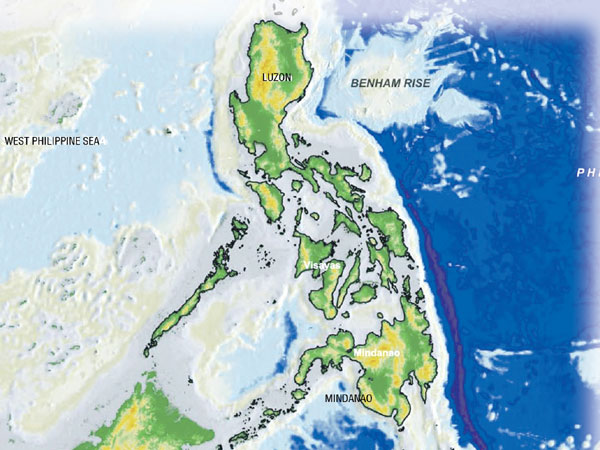
BENHAM’S RICHES The Philippines is the only claimant to 13 million hectares of an undersea region that contains huge natural gas deposits.
The Philippines will gain 13 million hectares in additional territory, an area slightly smaller than Luzon, should the United Nations approve next year the government’s claim on a region off the coast of Isabela and Aurora, Environment Secretary Ramon Jesus Paje said on Monday.
Paje said the undersea region, called Benham Rise, could turn the Philippines into a natural gas exporter because of the area’s huge methane deposits.
Studies conducted by the Department of Environment and Natural Resources (DENR) for the past five years indicate large deposits of methane in solid form, Paje said after a Senate budget hearing.
The government is only awaiting a formal declaration from the UN Convention of the Law of the Sea (Unclos) that Benham Rise is on the country’s continental shelf and therefore part of its territory, Paje said.
Legal basis
Once the Unclos establishes that Benham Rise is part of the Philippines, “we would have legal basis to enter into exploration agreements with private companies to explore… (the area’s) resources,” said Sen. Franklin Drilon, chair of the chamber’s finance committee.
Drilon said a favorable Unclos declaration would mean “increasing our territory from present 30 million hectares to possibly 43 million” with the inclusion of Benham Rise.
Discussion over Benham Rise generated excitement especially after Paje said that Philippine representatives were just awaiting one more meeting “to answer questions” before a special Unclos committee.
Only claimant
Paje said there was no reason for the Unclos committee not to issue a decision favorable to the country “since we are the only claimant, unlike in the western side (where the Spratly Islands are).”
“We have submitted a claim under (Unclos) sometime in late 2008. We got a reply from the UN lately (asking us) to answer some questions. They intend to pass a resolution sometime in mid-2012 to approve our claim (that it is) part of the Philippine continental shelf,” Paje told reporters after the hearing.
Records showed that the Philippines officially submitted a claim with the UN Commission on the Limits of the Continental Shelf in New York on April 8, 2009.
Davide submission
Hilario Davide, then Philippine ambassador to the United Nations, filed the country’s partial submission with the commission.
The United Nations says the continental shelf is “the seabed and subsoil of the submarine areas that extend beyond its territorial sea” up to 370 km (200 nautical miles) from the archipelagic baseline. An extended continental shelf goes farther than 370 km.
The Philippines claims that Benham Rise is an extension of its continental shelf.
Paje said Benham Rise was within the country’s 370-km exclusive economic zone.
American geologist
The environment secretary said an American geologist surnamed Benham discovered the area that was between 40 and 2,000 meters below the waterline in 1933.
“But we are able to define categorically that it is attached to our continental shelf only recently. We have proven (to) Unclos that it is attached. So now the UN is considering it for decision sometime in 2012,” Paje said.
He said gas deposits in the area would enable the country to achieve energy sufficiency.
“Benham Rise is very relevant because of its gas deposits (which has been) confirmed particularly by (the) National Mapping Resource Information Agency. It has given us the data that (the area) contains solid methane. We have not explored it but we have found nodules of methane in the surface and this is very important to us,” he said.
Kalayaan, Scarborough
The Kalayaan Island Group, which is part of the disputed Spratly Islands and Scarborough Shoal, both located in the West Philippine Sea (South China Sea) and claimed by the Philippines, are also believed to contain oil and natural gas.
Paje said there was the possibility that the country could export gas in the future.
The secretary added that there would be a demand for gas deposits in Benham Rise “because it’s much cleaner than (other) fossil fuels.”
The DENR formally submitted its proposed P16.99-billion budget for 2012 to the Senate finance committee.