|
Posted: 22 Jun 2012 02:15 AM PDT
When in Manila and looking for a new travel destination, how about looking into the possibility of visiting Batanes? It’s the northernmost group of islands here in the Philippines, best known for its untouched and unspoiled beauty that it has even earned a nomination in the UNESCO World Heritage List.
The tickets can be a tad too expensive (more or less P8,000 for a one way trip) but do believe me when I say that it’s going to be worth it! This statement might come off as a biased one coming from me (seeing as Batanes is my lovely hometown) but head on to Google and search for reviews and you’ll surely see a lot of tourists singing praises! *beams with pride*
I was raised in Batanes for almost 15 years. Which means that I know my way around the island; so from a trueblood ‘Ivatan’ to you, here’s a list of things that you should ABSOLUTELY do when you’re in Batanes:
1. Go to the beach in Batanes.
My best picks: Chadpidan Beach, Sabtang Beaches, and Nakabuang Beach. And yes sir, we do have beaches that can equal the beauty of Boracay! The perfect plan? Just lounge by the shore, have a picnic, grill some fish (try Batanes’ favorite fish: the ‘dibang‘ or flying fish), grab some booze and play some music!

Photo by Opal Bala
And you shouldn’t leave the island without witnessing at least one sunrise and one sunset.
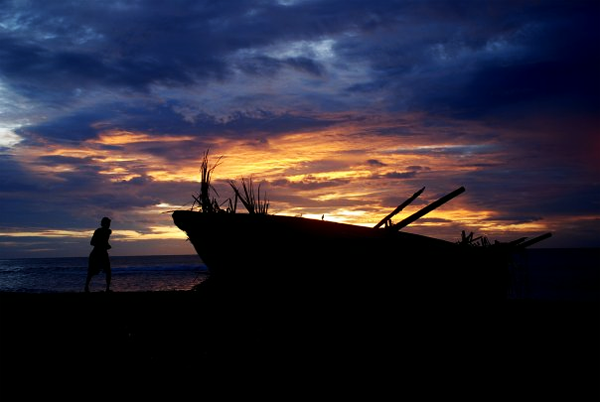
Photo by Opal Bala
If you want a photo spree in one unique beach, try Valugan’s beach. There are these numerous large boulders that charms a lot of photographers.
2. Get to know the Ivatan people and their history and culture in Batanes.
Ivatans are probably the warmest people that you will ever meet in your whole life. They’re a bit shy at first but just strike up a conversation and they’ll be more than happy to answer your questions about Batanes. They might even offer to take you to a popular landmark, likeFundacion de Pacita Abad, the former house of internationally known artist Pacita Abad who was a trueblooded Ivatan, or bring you to the ruins of the Loran Station, a former US facility during the war.
Batanes also prides itself for its ‘almost‘ zero crime rate. For my 15 years of stay there, I can still remember the number of ‘cases’ and it doesn’t reach the count of five. I was so used to that way of living that when I started living permanently here in Manila, there was a phase where my friends would have to constantly exclaim, “Why aren’t you holding on to your bag? Don’t leave it all over the place!”
In fact, in Ivana, we also have this Honesty Coffee Shop where no one mans the store. We just list down the things that we want to buy and then we’ll drop our payment by the drop box.
TIP: You should meet Elo Hostallero in Sabtang (oldest man in Batanes) and Ida Estrella of in the house of Dakay (oldest house in Batanes).

Photo by Opal Bala
3. Visit the other islands in Batanes.
Batan is the main part of Batanes that comprises of districts Basco to Imnajbu, but you should also head on to the two remaining inhabited islands: Sabtang and Itbayat. Ride a falowa (Ivatan boat) to head on to these islands and you can even get to see dolphins during the wild and crazy boat ride.
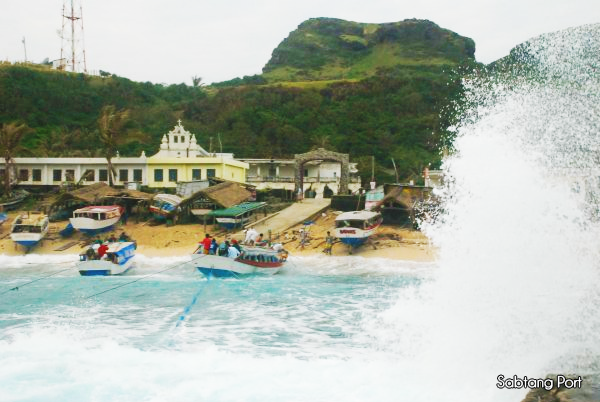
Photo by Opal Bala
4. See the stone houses in Batanes.
I remember someone asking me before: “So you guys live in caves?” I resisted the urge to laugh but, no, we don’t live in caves darling, but we do have stone houses.
In our language, we call our houses as ‘vahay‘ and as per Batanes history, the Spaniards taught us how to build them up using limestone and corals, and these stone houses could actually withstand strong typhoons and even earthquakes.
I’ve lived in the main municipality of Batanes which is Basco, a more urban place, and it almost has no stone house left. But there are stone houses in the other districts like Ivana and Mahatao, but it’s in Itbayat and Sabtang where you could see more of the stone house communities. (You should also check out the old churches!)
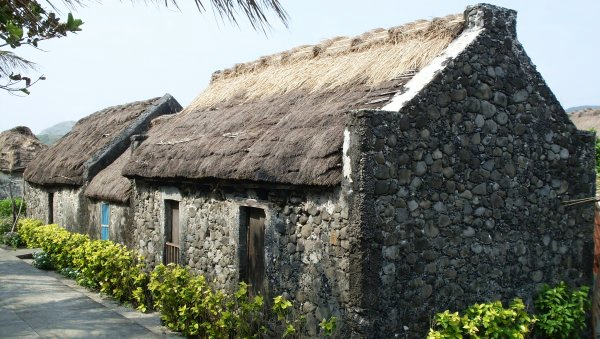
Photo by Opal Bala
5. Get your ‘The Sound of Music‘ game on, head to the hills (or the mountains), hike, and do jump shots in between!
One does not simply leave Batanes without taking jump shots in one of the numerous picturesque spots—which is like… everywhere! One couldn’t even call it a ‘Batanes’ experience if you won’t take the opportunity of going on a hike.

Photo by Opal Bala
My favorite place has always been the Naidi Hills (where you could also find the Basco lighthouse). I remember countless times when my classmates and I would roll down the hills and then I’d arrive home with bruises and bits of grass in my hair and on my clothes. (Island life FOR THE WIN!) Try to find time to also trek Mt. Iraya!
6. Drop by the island’s own ‘Marlboro Country’ in Batanes
We call it ‘Rakuh a Payaman‘ which showcases this breathtaking view of vast pasture lands with the Pacific Ocean as a backdrop.

Photo by Opal Bala
7. Roam around in two wheels in Batanes.
This is a must! There are shops that lend you bicycles (I’m not sure for motorcycles), so go ahead and rent one and then travel along the winding and cliff-hugging roads that connects one district to the next. If you’re up for it, you can bike from Basco up to the end of Batan island which is Imnajbu; it’s a long bike, alright! But my friends and I have done this countless times and we usually finish in just half a day! So awesome!
Sidenote: I miss seeing these ‘Blow UR Horn‘ signs.
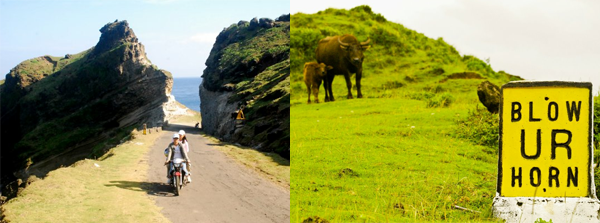
Photo by Opal Bala
8. Go ‘top loading’ in Batanes
Go top loading on a jeep! It’s dangerous if you think about it: the jeep will be working its way through winding roads so I bet you have these visions of yourself getting thrown off the cliff or something. But I’ve never heard of someone dropping to his death due to top loading. It’s really fun! Try top loading too on a falowa while on your way to the other islands.

Photo by Opal Bala
9. Try to attend at least one fiesta in Batanes.
It gets really lively and you’ll get to see cultural presentations like the Palo-Palodance, Fundanggo, Sagalas and
Other festivites: Ivana Fiesta (May 1), Uyugan Fiesta (May 10), Diptan Fiesta (June 13), Valugan Fiesta (June 27), Basco Fiesta (August 8), Mahatao Fiesta (November 4), etc.

Photo by Opal Bala
10. Eat, eat, EAT in Batanes!
As a seafood lover, I advise that you ABSOLUTELY try the payi (lobster), tatus (
Rootcrops: pinasu a wakay, dukay, gabi, and amay (mashed kamote and taro). And yes, never forget to try vunes (dried gabi) and uved (pork balls with flying fish and banana trunk). For the absolute experience: eat it with your hands, baby!
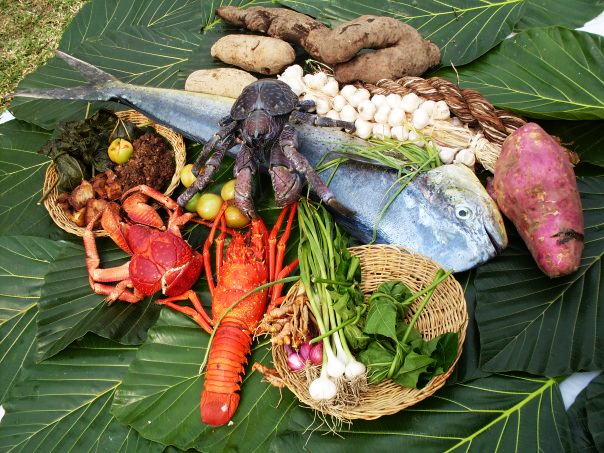
Photo by Opal Bala
There’s still a LOT of other things that you could do in Batanes, really. You could go scuba diving, surfing, and more. But When in Batanes, do these top 10 things and you’ll definitely have an EPIC and MEMORABLE time in this Philippine wonder. Guaranteed!
When in Cebu City, the Queen City of the South, please visit gregmelep.com to complete your trip. |
Showing posts with label Batanes. Show all posts
Showing posts with label Batanes. Show all posts
Friday, June 22, 2012
Top 10 Things To Do When in Batanes


Tuesday, June 14, 2011
The paradise islands of Batanes
By NOEL F. DE JESUS

Sabtang Island (Photo by MA. GLAIZA LEE)
MANILA, Philippines -- Green rolling hills, massive boulders and cliffs, black or white sand beaches, exuberant flora and fauna, flourishing marine life—unspoiled and preserved by the friendly Ivatans.
Little is known to the outside world of the untamed frontier of Batanes. But since the entry of Smart Communications Inc. in 2001, as stated by Batanes provincial Governor Vicente S. Gato, it improved the impression that Batanes is no longer isolated from the rest of the Philippines and in fact, gradually become known all over the world. And there has been an influx of foreign tourists since then.
I thought a co-player of mine at the triathlon club was being hyperbolic when he used to tell me that the Batanes island group is the most beautiful place in the Philippines. When I recently joined some close friends to tour Basco and other towns in Batan island as well as the island of Sabtang, what I beheld exceeded my expectations. Now it’s my turn to wax lyrical about Batanes: every Filipino citizen must make sure to visit this paradise place at least once in his or her lifetime.
Even assuming that today, only 10 percent of our population have sufficient income to be able to afford domestic tourism, there are already seven million potential visitors to the Batanes group of islands. We don’t even have to depend on foreign tourists. For a Filipino, visiting Batanes is a unique experience because its scenery and people are by far different from those in the rest of the Philippines.
All the theories about sustainable development that I teach to my Economics students seemed to come to life in front of our eyes as we went from village to village and talked to islanders from all walks of life. And the tourism brochure was not exaggerating when it wrote that “beyond the gorgeous and breathtaking landscapes for which the islands are known, Batanes has much to contribute in promoting a development process that puts a high premium on respect for nature and the environment, indigenous wisdom, cultural integrity, civic responsibility, voluntary cooperative and deep religiosity.”
We confirmed the fact that the Ivatans, the natives of Batanes, are among the friendliest people in the world. Everyone you meet in the street has a smile, a friendly greeting and a gesture of wanting to be of help. In Basco, we stayed in a lodge with Spartan facilities but we hardly missed city life. A well crafted brochure published by the Office of Northern Cultural Communities and the Katutubong Filipino Foundation, Inc., aptly described the province: “For those who seek life’s modern conveniences, Batanes can be described as drab or poor. For those in search of the human spirit lost in the din of modernization, it is an oasis.” There are no prostitution houses, no organized gambling, no beggars and squatters. Rebellious activities are unheard of and its crime rate is the lowest in the country. Jails are virtually empty because the people try to settle matters at the barangay level.
In the islands of Sabtang and Itbayat for instance, windows and doors are left open the whole day and nothing gets lost. The only time the Ivatan bolts his windows and doors is during a typhoon.
In the island of Sabtang, we had a really close look at the admirable spirit of solidarity of Ivatans especially in the enchanting town of Chavayan where the most authentic Ivatan culture is preserved. There we met an energetic Ivatan in his 80s who is known as Mr. Yaru. As the brochure on Batanes explained in great detail, yaru is an occasional self-help cooperative which calls on the whole community to help in work projects like road repair, chapel construction or even sprucing up the cemetery. After a typhoon for instance, community leaders call an assembly to estimate damages to roads, fix schedules and assignments in the spirit of yaru. Every family is expected to send at least one member to the work at hand; families with more than five members may be asked to send two representatives. Through the yaru, an Ivatan can count on the community to help him build or fix his house.
In fact, the spirit of this voluntary communal labor is so pervasive among the Ivatans, it has spawned a number of words in their dialect, each pertaining to a specific variation.
The kayvayvanan, for one, is used mainly to refer to house building, clearing of agricultural land and planting. As such, volunteers to a kayvayvanan are necessarily able-bodied men or women. The elected leaders work out a schedule and the members take turns using the services of this group.
The payuhuan operates on the same principle as the kayvayvanan but applies to smaller-scale farm jobs as well as everyday tasks like weeding and planting. Members of the payuhuan are usually close friends and relatives giving it a more intimate social closeness than the kayvayvanan. The kayvayvanan may also be contracted for paid labor, which is not true of the payuhuan.
The spirit of yaru seems to be the more developed and enduring version of the Tagalog’s bayanihan. It disproves any myth that Filipinos are inherently uncooperative and that they have the so-called “crab mentality.” Visiting Batanes could be a way for Filipinos to rediscover that we may have the capacity to work together in the spirit of solidarity.
Another striking feature of the Ivatans is their high rate of literacy, which at 95 percent is above the national average of 93 percent. Everyone we met could speak to us in both English and Tagalog. This means that every adult in Batanes is at least trilingual because Ivatan is spoken in the islands of Batan and Sabtang while Ichbayaten is spoken in Itbayat, the largest island. Governor Gato has focused a great deal of his efforts on improving and maintaining the quality of basic education.
Batanes deserves more attention from the national government, especially in the area of infrastructure development. The most pressing need is for an all-weather port costing an estimated R100 million to be constructed in the town of Makatao. This will improve the access to the province by modern fast boats (e.g. supercats and waterjets from Aparri and other parts in Northern Luzon).
Families looking for a unique place to visit in the coming months of April and May (relatively typhoon-free) should think of Batanes as a tourist destination. I’m sure the superlatives I have used in this article have not sufficiently described what the first timer will see in these paradise islands of the North.
Tuesday, February 8, 2011
Untouched, Unspoiled Batanes
By Niña Terol-Zialcita
January 30, 2011, 1:26am

Fundacion Pacita, a cultural landmark in Batanes.
It was going to be a different year, I told myself. For starters, I would do away with the usual loud and head-cracking New Year revelry and stay where my husband and I could breathe clean air, fall asleep to the sound of crickets and the crashing waves, and have 360-degree views of Mother Nature at her best. We would figuratively and literally unplug ourselves from my gadgets and from the toxicity of a frenetic urban life, and begin 2011 in a place that is pristine and virginal, removed from the excesses of the life that we had gotten accustomed to in chaotic, cacophonic Metro Manila.
For that purpose, there was no other place on our mind but Batanes, that almost-mystical group of islands that has been likened to Scotland or New Zealand but which remains very much in touch with its Ivatan roots. Years ago, people scoffed at the thought of flying to Batanes because of the impression that it was too “backward.” (“We hated flying there,” I had been told by a former flight attendant. “There was nothing to do!”)
Now, however, with sustainability on everyone’s minds, and with a collective call to reimagine the way we live and adopt a back-to-basics approach in our lifestyles, people are training their eyes on Batanes not only as a superb getaway destination where they could (quite literally) throw their cares away, but also—and more importantly—as a model for a sustainable, reimagined Philippines.
Proud of their culture
Imagine this: Even from thousands of feet above the sea, the sights that will greet your eyes will already be enough to declare the majesty of the Batanes Isles deep-green mountainous islands stand proudly against the azure waters of the South China Sea and the Pacific Ocean, their lush mountaintops showing no signs of erosion or human intervention. Only three (Batan, Sabtang, and Itbayat) out of the eleven islands comprising Batanes are inhabited by some 17,000 people, leaving plenty of space for vegetation to grow, for cows to graze lazily, and for Mother Nature to unfurl her virtuous best. The rest of the islands remain untouched and unspoiled by human hands.
A tour around the islands shows how the Ivatans take pride in their collective history and culture. Centuries-old churches remain preserved and stand proudly in the middle of the town, their clean exteriors belying the fact that they had borne witness to the wars, disasters, and struggles that have helped to define a people. In Savidug and Chavayan villages in Sabtang Island, even the ruins of the old stone houses bore the marks of quiet dignity and pride. I wondered about the stories behind these walls and the secrets that they kept, observing that even in the chilly winter weather and in the pregnant silence of the tour, the villages were not eerie at all but seemed to exude the quiet elegance of a grand old matriarch.
Imagine if more towns in the Philippines could show this much respect for history and culture: What would Intramuros or Binondo look like today?
No poverty, no hunger, no crime
Dignity is a word that can definitely be associated with the Ivatans. Although the towns boast no large malls or spectucular structures, and although the province itself is classified as a fifth-class province, the people eat and live well, are educated, and live in an atmosphere of peace.
According to the Philippine Human Development Report 2008/2009, Batanes had the highest basic education enrollment rate (100 percent in 2004); ranked third in terms of real per capita income in the country (R33,578 as of 2006); was ranked sixth nationwide in Knowledge indicators; and was in the Top 10 provinces with the highest standards of living (rank: eight, as of 2006). It ranked higher worldwide than Laguna, Batangas, or even Indonesia or Morocco. It likewise placed in the Top 10 in terms of gender-related development and employment, and was second nationwide in terms of female participation in economic activity.
When I asked our tour guide, Jacklord Labrador, if it was true that Batanes had “zero crime rate,” he said that it was mostly true because everybody could eat well and was educated, and there was therefore very little incentive to steal or commit crimes. What could be considered “police stories” for them, Jack relayed, would be accounts of neighbors having loud arguments after a night of beer-drinking.
Batanes is also known for a small store called Honesty Coffee Shop, where there are no attendants and where visitors just log their purchases onto a small notebook and drop their payments into a small drop box. (Don’t expect to get any change back!) This epitomizes the trust which the residents of Batanes demonstrate within their community.
Food here is plentiful because residents practice backyard farming, where they grow their own vegetables in their own little gardens. When my husband asked Jack if there was any bartering or selling between residents for vegetables, he laughed and said, “You won’t need to barter or sell because your neighbor would be growing the same thing as you are!”
And because the food and the air are fresh, people can live longer, healthier lives. While at Chavayan Village, a UNESCO-nominated village known for its pre-Hispanic limestone houses, our tour group met Lolo Marcelo, who by now has just turned 104 years old. He is still active as the community’s fishnet repairman, and although he complains of some pains on his fingers and knees because of the cold weather, he still keeps busy and has enough energy to entertain visitors like us. His secret? “I don’t eat meat—especially pork,” he declared.
Imagine if people were well-fed and well-educated, and if people did not have to migrate within or outside of the country just to find livelihood and food to eat? What would our rural towns look like? What would a healthy, educated, dignified population look like?
Born to fly
Our five-day stay in Batanes and our lively interaction with the locals revealed to us the subtle pride with which the Ivatans lived. Their strict adherence to Land Use policies—some dating back to the days of tribes and clans—demonstrate deep respect for culture and tradition that is very much integrated into their everyday lives and transactions. Here, inherited land cannot be sold, and property that has been marked as agricultural land cannot have any sort of permanent structures on them—not even fences. Hence, boundaries of communal pastures and other property are marked by bright yellow-green hedges that add to the brightness of the green landscape.
While at Fundación Pacita, another cultural landmark in Batanes that has become the sanctuary for artists and other creative souls (being the former workshop of the late great artist, Pacita Abad), we spoke to Protogenes Galarion of the Jorge, Aurora, and Pacita Abad Foundation. He proudly relayed to us bits of Ivatan history and of the Foundation’s work in preserving Ivatan houses and supporting the artistic endeavors of indigent Ivatan artists. He spoke passionately about their influences and about how their simple but rich way of life has shaped the way they view the world.
“We are a fifth-class municipality, but we have a high standard of living,” he points out. “We are a highly educated people, and we have more Ph.D.s than [some provinces that claim to be more progressive.] We value education, we value our culture, and we’d rather maintain our simple but adequate lifestyle than be polluted by the commercialization that is now happening in [other islands].”
Speaking of tourism, we noted the steep air fares to and from the province, and we asked why it was that nobody in the island has pushed for more efficient sea transport to the rest of the country.
“We were born to fly,” he said as-a-matter-of-factly. “Our first trips outside of the island are on an airplane. That’s how it has always been, and that’s how we hope it will stay.”
It was a response that caught me off-guard. It was so honest, so authentic, and so real that it was practically indisputable. Batanes is a place of respect and pride, of time-honored values that have kept a people and their traditions intact through the centuries. There was nothing arrogant or flamboyant about them—all the locals whom we met on the trip were gentle people who spoke moderately and without any hint of brashness. They acknowledge what they have and work hard to enjoy their little luxuries, and they don’t spend their time pining away for things that are out of reach.
Now imagine a country where the simple abundance of Batanes could be the norm—where there was pride and dignity not because of medals, awards, and wealth, but because of knowing that one had everything that one needed to stand on his or her own. To me, Batanes is “the little island that could,” and if only we looked back and learned from this town that others had deemed “backward,” we will find that everything we need to reimagine and reshape the country is just within our reach.
Imagine that.
When in Cebu City, please visit gregmelep.com for your real estate and retirement needs.
Thursday, December 30, 2010
25 THINGS TO DO IN THE PHILIPPINES …

… before fantasizing about exploring other countries
1. Go white water rafting in Cagayan de Oro.
2. Visit Batanes.
3. See Mt. Mayon up close.
4. Swim with the whale sharks in Donsol.
5. Climb Mt. Pulag and be awed by its sea of clouds.
6. Dive, swim and explore Palawan’s underground river.
7. Hike and let the view of Mt. Pinatubo crater take your breath away.
8. Party in your bikini in Boracay.
9. Surf’s up! Choose your wave—La Union, Zambales or Real, Quezon.
10. Missed out on the pristine beauty of Boracay 15 years ago? Visit Malapascua, Cebu.
11. Dive and see the rich marine life of Anilao, Batangas.
12. Travel back in time—go to Vigan.
13. Let Bohol wow you with its many offerings—the Chocolate Hills, the tarsier, the Loboc River Cruise, old churches and the beach.
14. Go high! Drive to the Mountain Province of Sagada. Check out the caves, the hanging coffins and enjoy the laidback lifestyle.
15. Grab a Viaje del Sol map, visit Ugu Binyan’s pottery studio, eat at Kusina Salud and unwind at Casa San Pablo.
16. Spend an entire week up north. Take a road trip from Manila to Vigan, Ilocos, Cagayan Valley, Aparri and Isabela!
17. Try wakeboarding in Camsur.
18. Check out Malate, Old Manila and all their secret spots.
19. There are many reasons to love Davao. Kublai’s artworks, its proximity to the beach, the tasty pastil and juicy suha. And did I mention that it’s a smoke-free city?
20. Spend a weekend roughing it in Anawangin and Capones in Zambales.
21. Check out our colorful fiestas and document them with your camera. Ati-atihan, Dinagyang, Masskara, Sinulog, Higantes, Panagbenga and more.
22. Pick your own strawberries at the Strawberry Fields in La Trinidad, Benguet.
23. Go to Pampanga for sisig.
24. If it’s too hot in Manila, grab a few friends and take a quick trip to Tagaytay.
25. Enjoy a food trip in Iloilo. You’ll never go hungry in this city.
When in Cebu City, please visit gregmelep.com for your real estate and retirement needs.
1. Go white water rafting in Cagayan de Oro.
2. Visit Batanes.
3. See Mt. Mayon up close.
4. Swim with the whale sharks in Donsol.
5. Climb Mt. Pulag and be awed by its sea of clouds.
6. Dive, swim and explore Palawan’s underground river.
7. Hike and let the view of Mt. Pinatubo crater take your breath away.
8. Party in your bikini in Boracay.
9. Surf’s up! Choose your wave—La Union, Zambales or Real, Quezon.
10. Missed out on the pristine beauty of Boracay 15 years ago? Visit Malapascua, Cebu.
11. Dive and see the rich marine life of Anilao, Batangas.
12. Travel back in time—go to Vigan.
13. Let Bohol wow you with its many offerings—the Chocolate Hills, the tarsier, the Loboc River Cruise, old churches and the beach.
14. Go high! Drive to the Mountain Province of Sagada. Check out the caves, the hanging coffins and enjoy the laidback lifestyle.
15. Grab a Viaje del Sol map, visit Ugu Binyan’s pottery studio, eat at Kusina Salud and unwind at Casa San Pablo.
16. Spend an entire week up north. Take a road trip from Manila to Vigan, Ilocos, Cagayan Valley, Aparri and Isabela!
17. Try wakeboarding in Camsur.
18. Check out Malate, Old Manila and all their secret spots.
19. There are many reasons to love Davao. Kublai’s artworks, its proximity to the beach, the tasty pastil and juicy suha. And did I mention that it’s a smoke-free city?
20. Spend a weekend roughing it in Anawangin and Capones in Zambales.
21. Check out our colorful fiestas and document them with your camera. Ati-atihan, Dinagyang, Masskara, Sinulog, Higantes, Panagbenga and more.
22. Pick your own strawberries at the Strawberry Fields in La Trinidad, Benguet.
23. Go to Pampanga for sisig.
24. If it’s too hot in Manila, grab a few friends and take a quick trip to Tagaytay.
25. Enjoy a food trip in Iloilo. You’ll never go hungry in this city.
When in Cebu City, please visit gregmelep.com for your real estate and retirement needs.
Source: Philippine Daily Inquirer
Subscribe to:
Posts (Atom)