
When In Pampanga, what comes to a traveller’s mind?
Food. Glorious, sumptuous food.
The Pampanguenos are proud of their rich food culture. And they should be. Colorful, flavorful, diverse in cooking preparations, Kapampangan cuisine is fiercely guarded by its gatekeepers. Whereas we Manilenos are admittedly more liberal in what we call Filipino food, for the Pampanguenos, no, they’re very regional, possessive of their dishes, even to the point of claiming that Kapampangan food – REAL Kapampangan food – can only be prepared by someone who has Kapampangan lineage.
That’s what we found out when we set off to Magalang, Pampanga to visit Abe’s Farm.
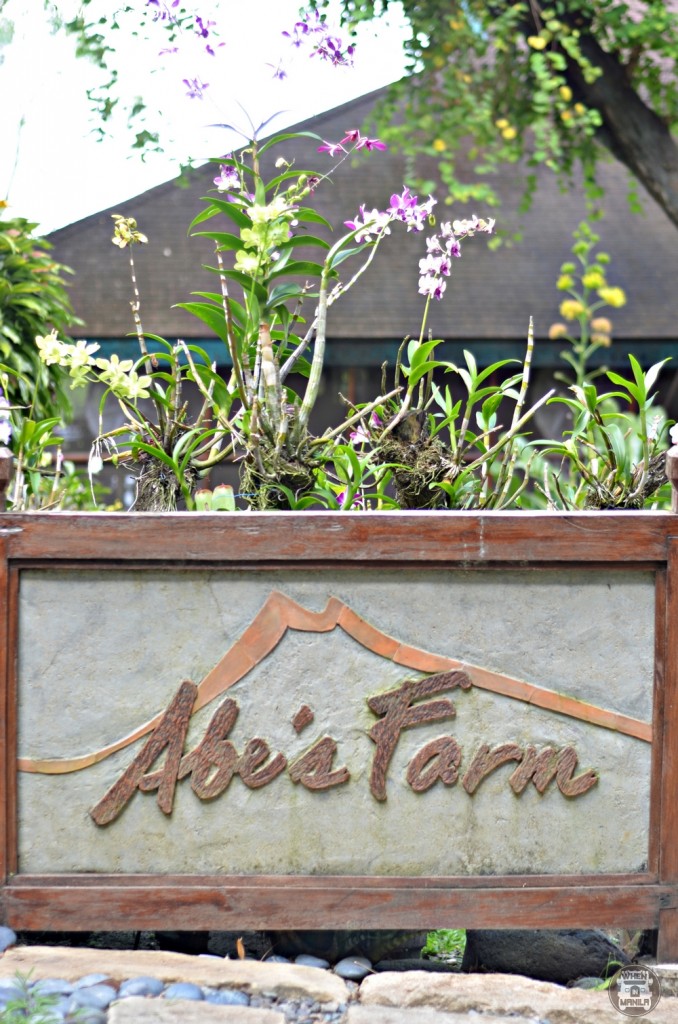
Abe’s Farm is roughly a two-hour drive from the metro via the North Luzon Expressway. From the Angeles Exit, it’s about a 45-minute drive towards the direction of Mt. Arayat. Located far from the town proper, pollution is practically non-existent in Abe’s Farm. And that’s good, considering that the vegetation they grow here are distributed to the different establishments under the LJC Restaurant Group.
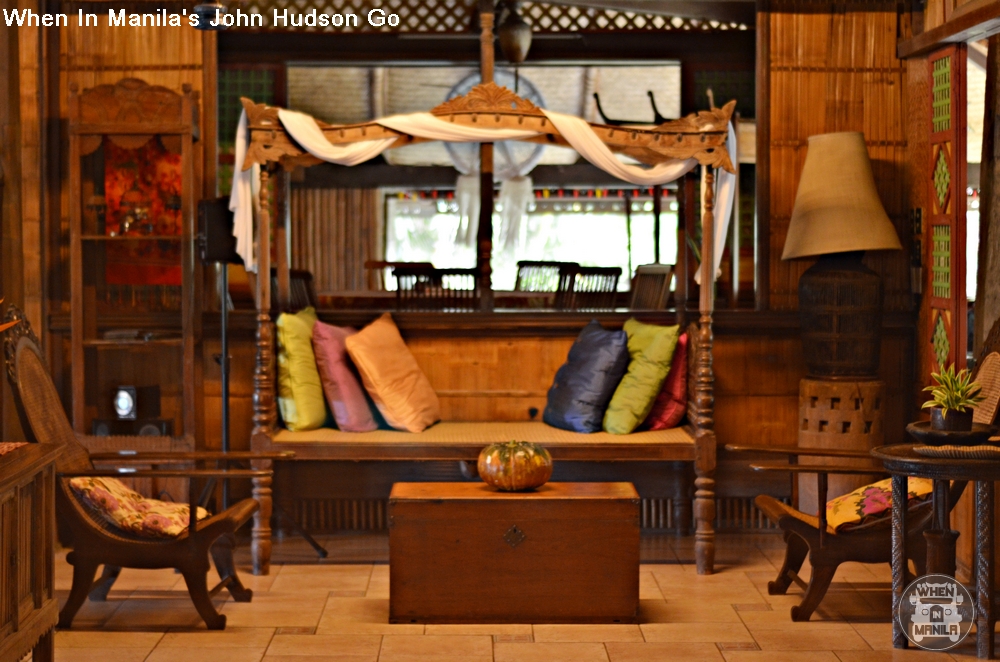
We were welcomed in this old-Filipino sala with cold drinks as our rooms were being prepared.
The Main House and Restaurant @ Abe’s Farm
The main house of Abe’s Farm is the original vacation house of the Cruz family. The ground floor has since been transformed into the resort’s restaurant. The menu is identical to the one they serve at Abe (Serendra, Trinoma, Mall of Asia). What makes Abe’s Farm worth the visit in terms of dining is the change in ambiance. Compared to the high-class feel of the restaurants, Abe’s Farm is proud of its cozy setting and home-cooked food presentation.
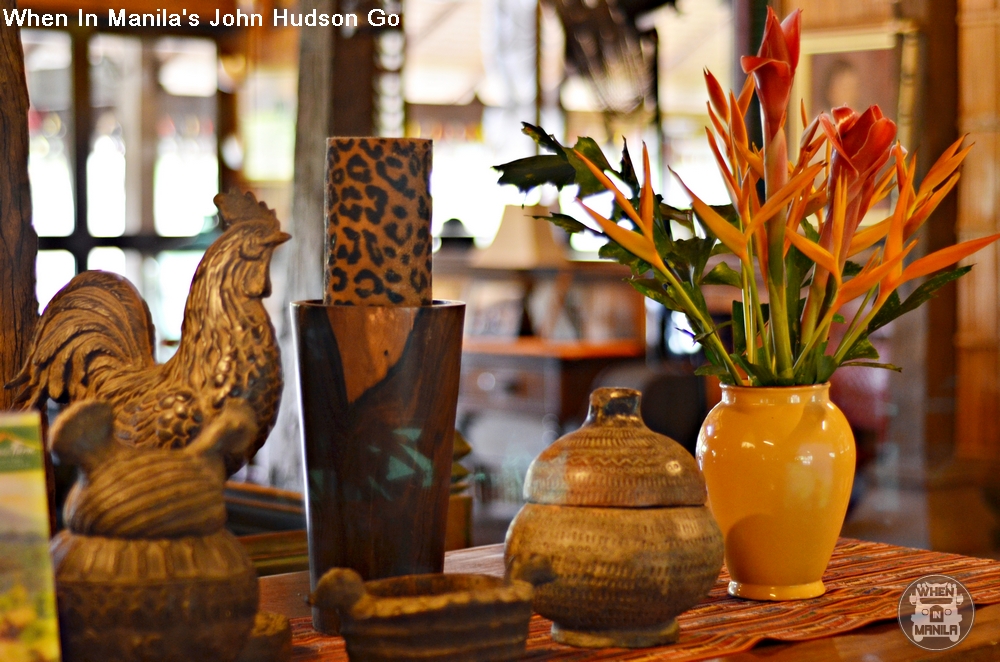
Some of the many trinkets inside the main house of Abe’s Farm.
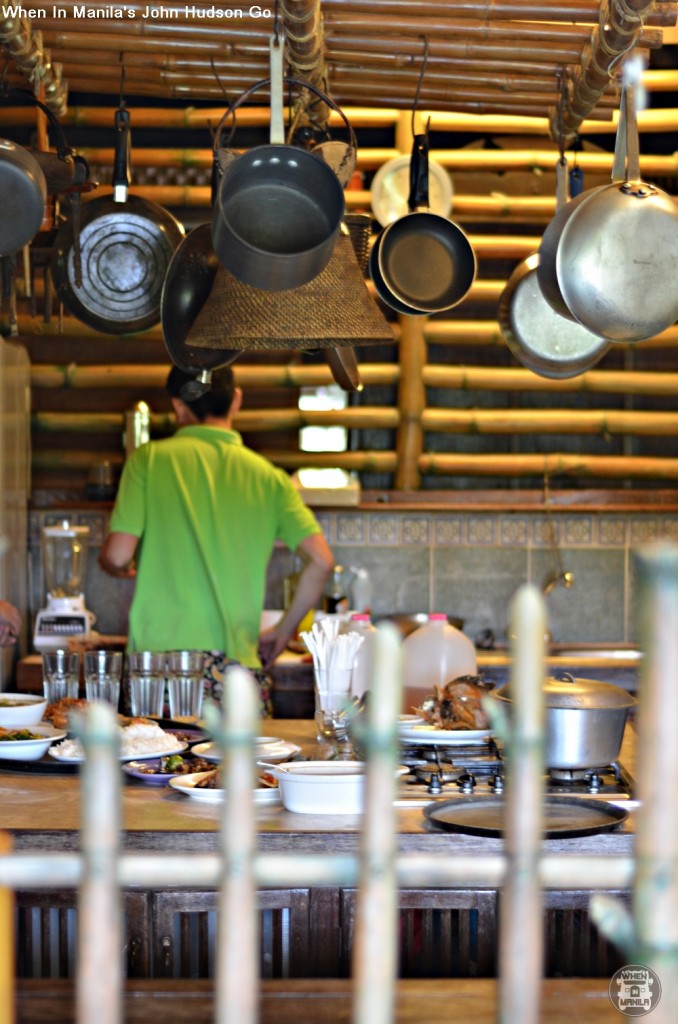
Nothing spells home-cooked like pans and other cooking equipment dangling above the counter in a traditional Filipino kitchen.
The Bulanglang starts out sweet and then turns salty to the taste. I have to admit, it is an acquired taste. After the first few awkward sips of the soup, I grew fonder of the sweet-yet-flavorful thick soup. The bangus belly was fatty, melt-in-your-mouth lovely. The conventional eater (such as my fiance) may not appreciate a sweet soup for appetizer though, so I highly recommend it to the adventurous foodies or natural guava lovers out there.
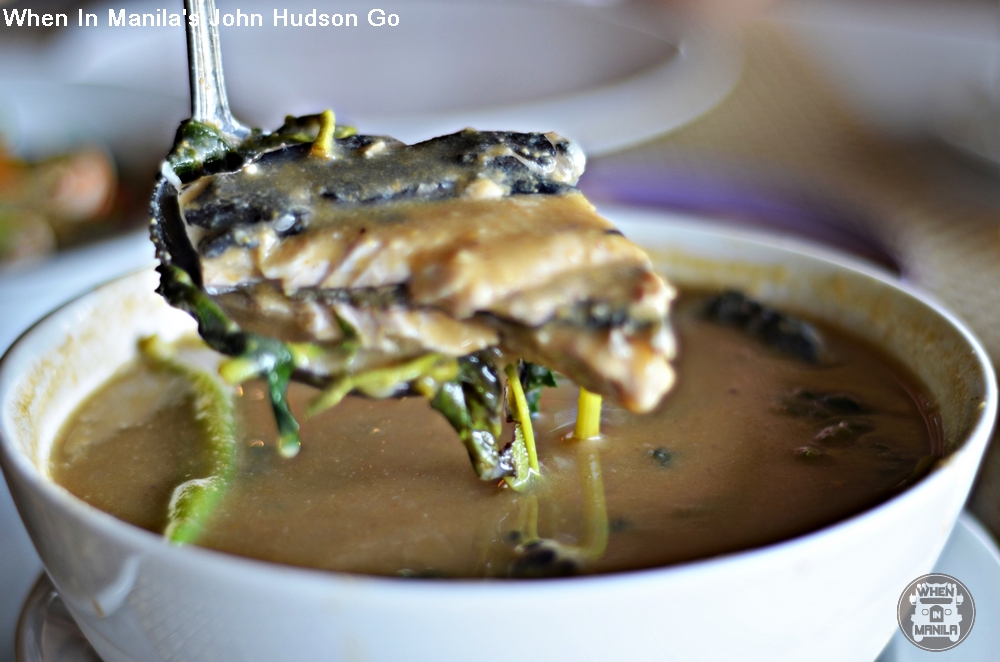
Sinigang Bangus Belly with Ripe Guava
The Knockout Knuckles in Abe’s Farm was really crispy, drizzled with sliced chilis for that added bite. Though deep-fried, the pork knuckles aren’t dripping with oil. We even thought they used a different method of cooking it! Paired with atsara and a combination of soy sauce, vinegar, and hot chili for its sauce, Abe’s Farm provides a fresh, hot take on the Pinoy fried favorite.
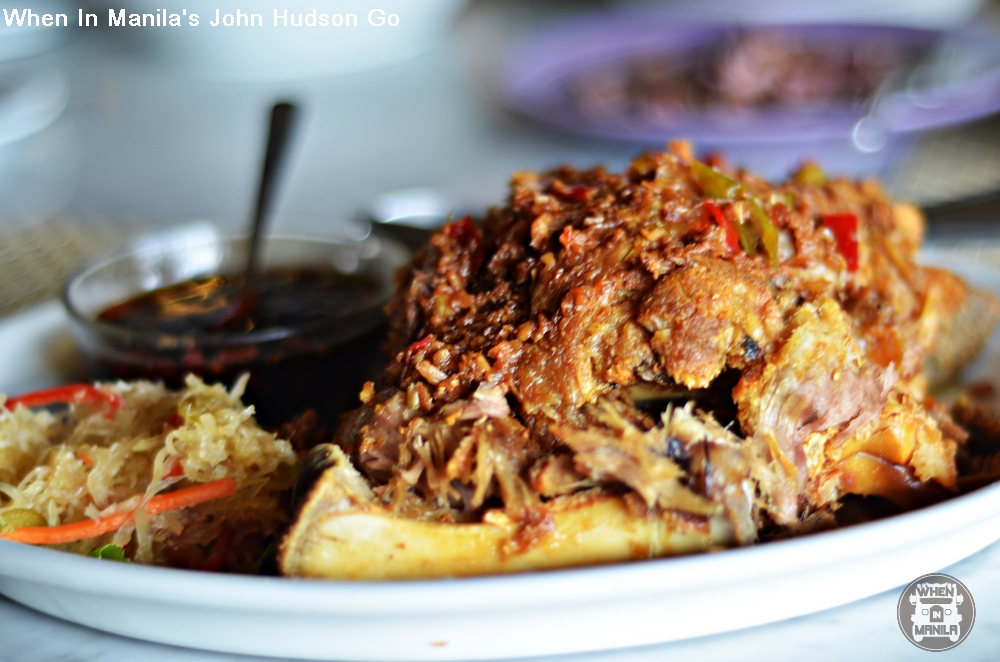
Knockout Knuckles
The Sinuteng Baby Squid was presented so simply, so casually I didn’t take a photo of the dish anymore. But what it lacked in presentation, it certainly made up for in taste! Served in a small, purple plate, the baby squids were soft and crunchy. Sautéed in garlic, ginger, cayenne pepper, and laurel leaves, the dish bathing in the mixture of oil and what little black ink the baby squids produced, this unassuming dish reflects the simplistic theme of Abe’s Farm and the slogan of the LJC Group that everything is “a matter of taste.”
Experience a luxurious and comfortable life + affordable rates and plans. Click here.
Speaking of the unassuming, we capped our lunch off with Sikreto ni Maria. Literally presented as a heap of ice cream and milk, you have to dig in to find out what lies underneath this sweet sensation. The macapuno ice cream is paired with carabao milk, making the dessert extra strong and creamy. Covered beneath are mango slices and suman. Finally, Sikreto ni Maria is topped with drizzles of panutsa (caramelized sugar bits), further adding to the texture and sweetness of the dessert.
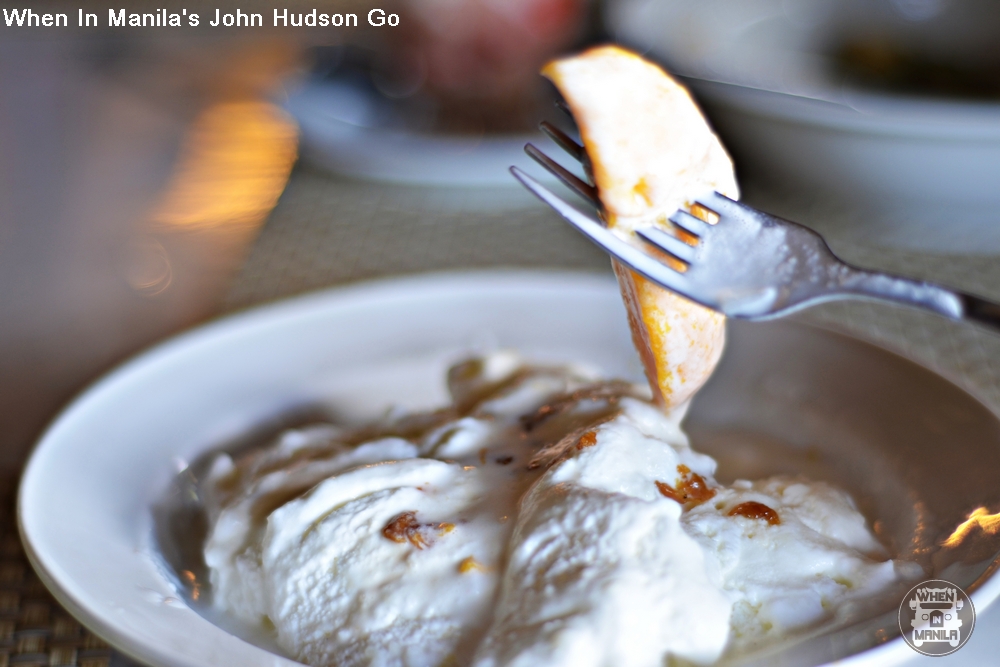
Natikman mo na ba ang Sikreto ni Maria?
Fast forward a few hours and it’s dinner time! The dishes that made an impression that night were Abe Farm‘s signature Binukadkad na Pla-Pla, Ox Tail Kare-Kare, Kapampangan Sisig, and Ube Jalea with Macapuno.
The Binukadkad na Pla-Pla, somewhat resembling Dumbo with his humongous ears, is deep fried with a light batter. Dabbing the flakes of fish with balo-balo (better known as burong hipon which consists of fermented rice and shrimp bits), this fried tilapia is uniquely sweet, salty, and flavorful.
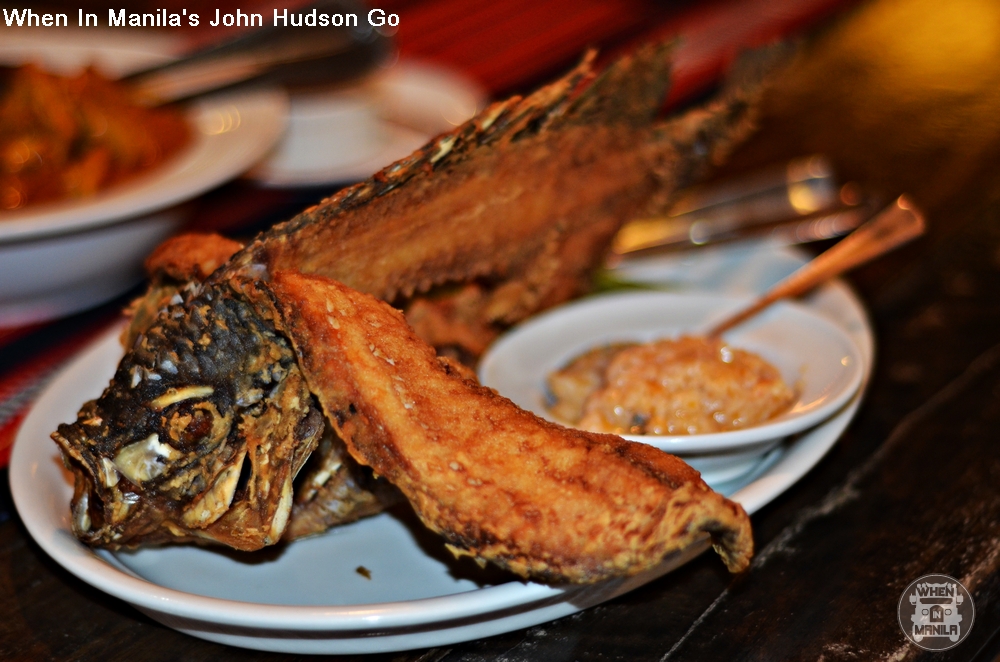
Binukad na Pla-Pla with Balo-Balo
Ox tail, peanut sauce, vegetables, and there you have it. For us Filipinos, Kare-Kare is not something that needs to look lovely. You just know that it is. No exception here. No embellishments whatsoever. Served as sloppily as it could be. Everything’s already mixed up. All we needed to do was pick up the utensils and dig in. The contrast of the lean meat, fatty skin, and crunchy vegetables was amazing! And you have to suckle the peanut sauce from the bone. To the last damn oily drop. Now that was a good dish!
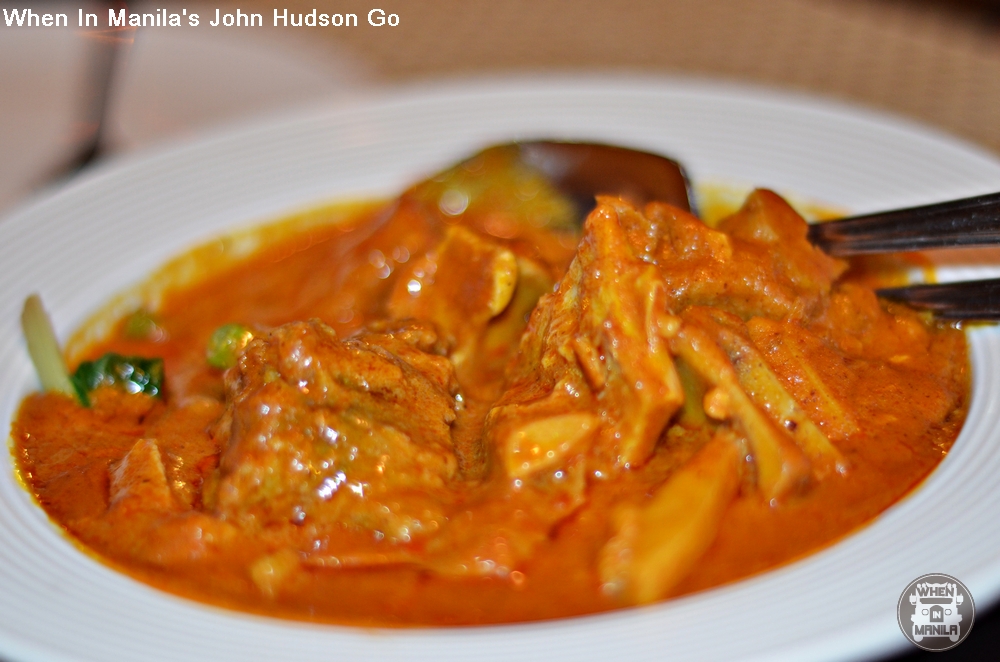
Ox Tail Kare-Kare
Sisig is a dish that is all too familiar to us, and yet we don’t really know where it came from. Apparently, it’s Kapampangan. True story! Look up Wikipedia if you don’t believe me. Sisigis generally served two ways: sizzling on top of an iron plate, or non-sizzling and served on a ceramic plate. Previous experience has conditioned me to prefer the former over the latter. By previous experience, I mean partaking Sisig that is stale, gummy, plainly disgusting. TheSisig at Abe’s Farm, however, is none of these. Served hot; with the perfect proportion of cheeks, ears, and liver; and of course a good amount of chopped onion and hot, spicy peppers; their Sisig kept me adding rice and more rice to my plate as we took this fatty beast down!
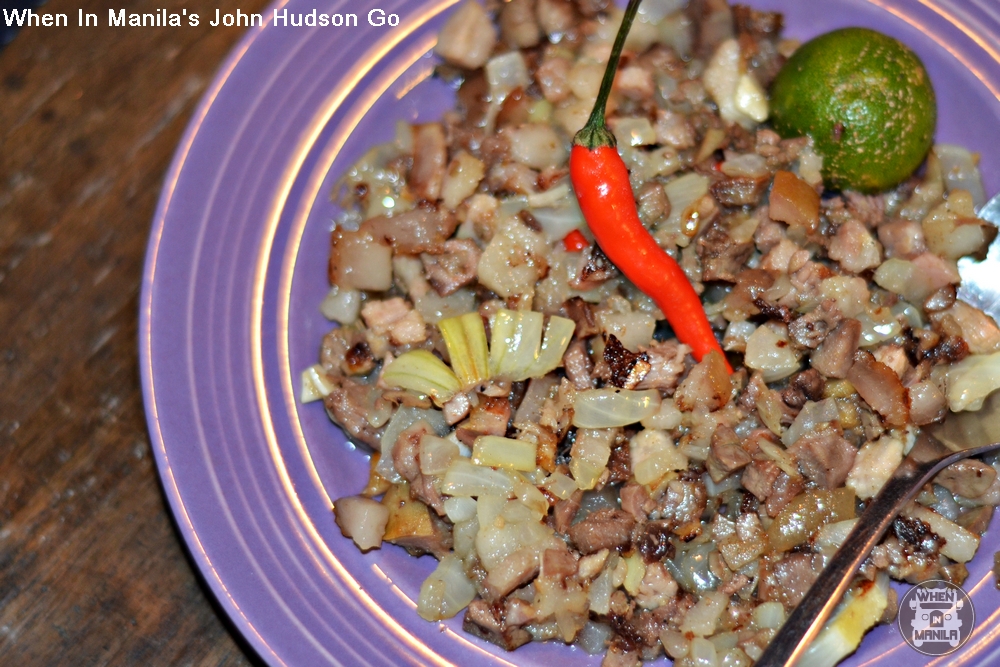
Kapampangan Sisig
And for dessert, the home-made Ube Jalea with Macapuno was perfect! Served as a scoop, the purple yam was fresh, chunky, and really tasty. I’m not the biggest fan ofube, but this dessert’s chunkiness and the fact that it doesn’t taste like the typical sugar-loaded ube won me over. It’s light so you wouldn’t have problems with the sugar rush ruining your night’s rest.
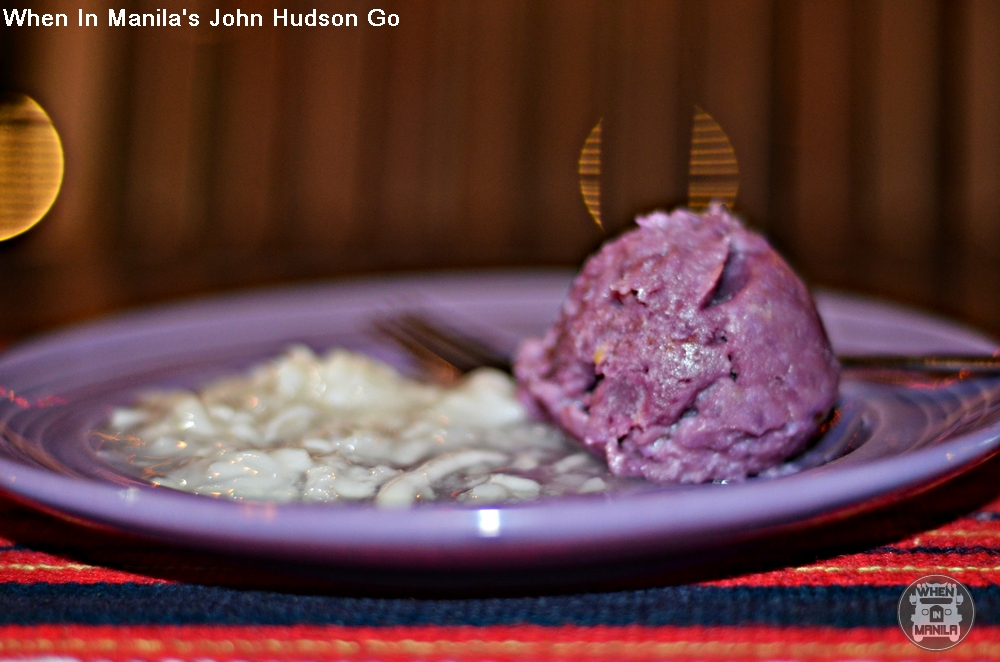
Ube Jalea with Macapuno
LJC made it a point that everyone working in Abe’s Farm is a proud Pampangueno. Ask anyone what dish you’re partaking, and they will not only tell you what it is, but how it’s prepared as well. Trust me, they know their Kapampangan dishes.
I was watching an episode of Anthony Bourdain’s “No Reservations” (Bourdain being one of my major inspirations in writing) and he was in Paris, curious about the new generation of chefs doing away with the high-class restaurants and Michelin Stars. Menus are changing day by day, depending on what’s available in the market. What’s fresh. What’s good. Everything’s casual. Everyone’s convivial with each other. The food, the company is good.
I guess Abe’s Farm (and I’m sure a dozen other Kapampangan restaurants out there) exists in a similar vein. No, the food doesn’t change from day to day. In fact, it’s relentless in sticking to what is Kapampangan, a highly regional take on food even as the globalization of the food we eat becomes all the more undeniable. But that’s just it: they don’t care. The food is cooked and served by Pampanguenos, prepared and presented just like they would be at home. The venue is cozy, rustic, more like an old, traditional house rather than the high-class restaurants of the LJC Group we find in Manila. The ambiance is so relaxed you’d be tempted to put up a leg and get food with your bare hands. And no one will prevent you from doing so.
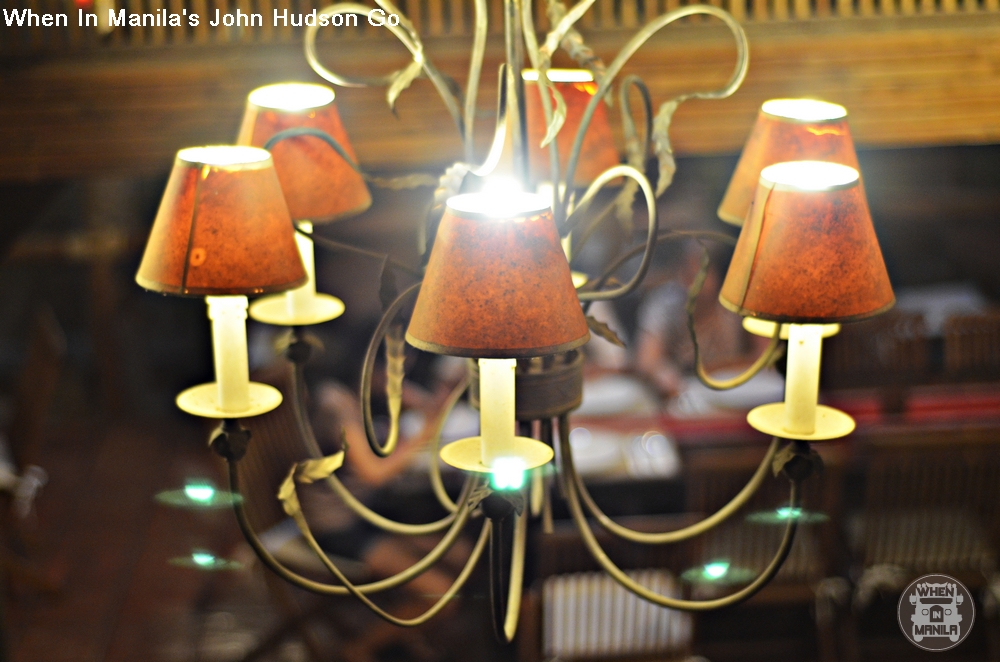
A rustic chandelier and the long table we were seated on for dinner.
During our stay, several families visited Abe’s Farm to dine in the restaurant. Not staying for the night, I assumed that they either resided in Pampanga or had relatives inPampanga. Either ways, they would be Pampanguenos in part or in whole. They didn’t eat a lot. Two to three dishes, rice, and that’s it. Point is, when locals eat in a place that serves local cuisine, I guess that restaurant is doing something right.
When In Pampanga, be sure to visit Abe’s Farm for great Kapampangan food, a good rub, and a relaxing stay (the latter of which I’ll write about soon).Visit their website to learn more about what the resort has to offer. When In Manila, you can also visit Aberestaurants found in Serendra, Trinoma, and SM Mall of Asia.

ABE’S FARM
98 Livestock Village, Barangay Ayala in Magalang, Pampanga
Open daily, 10:00 AM – 8:00 PM
Except Tuesdays
Except Tuesdays
For overnight accommodations, pre-booking is needed
Phone: + (045) 865-1930
Mobile: +(0917) 8085187
Mobile: +(0917) 8085187
Email: info@abesfarm.com.ph
Website: abesfarm.com.ph
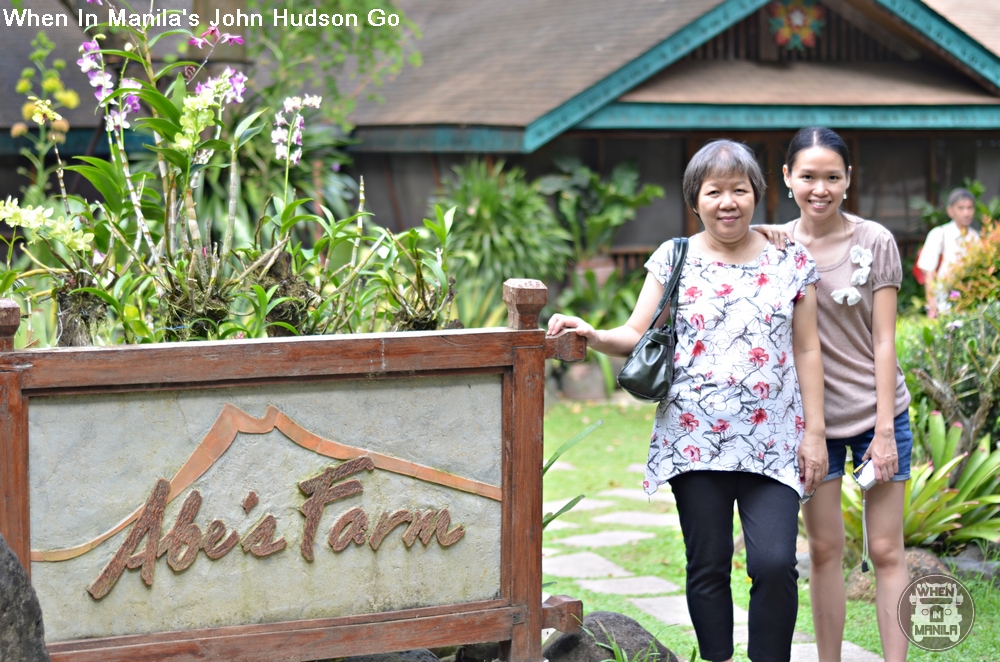
Special thanks to Ms. Evelyn and Mr. Oliver for the top-notch service you provided us!
ABE’S FARM IN MAGALANG, PAMPANGA: GREAT FOOD, GREAT PLACE!
When In Pampanga, what comes to a traveller’s mind?
Food. Glorious, sumptuous food.
The Pampanguenos are proud of their rich food culture. And they should be. Colorful, flavorful, diverse in cooking preparations, Kapampangan cuisine is fiercely guarded by its gatekeepers. Whereas we Manilenos are admittedly more liberal in what we call Filipino food, for the Pampanguenos, no, they’re very regional, possessive of their dishes, even to the point of claiming that Kapampangan food – REAL Kapampangan food – can only be prepared by someone who has Kapampangan lineage.
That’s what we found out when we set off to Magalang, Pampanga to visit Abe’s Farm.
Abe’s Farm is roughly a two-hour drive from the metro via the North Luzon Expressway. From the Angeles Exit, it’s about a 45-minute drive towards the direction of Mt. Arayat. Located far from the town proper, pollution is practically non-existent in Abe’s Farm. And that’s good, considering that the vegetation they grow here are distributed to the different establishments under the LJC Restaurant Group.
We were welcomed in this old-Filipino sala with cold drinks as our rooms were being prepared.
The Main House and Restaurant @ Abe’s Farm
The main house of Abe’s Farm is the original vacation house of the Cruz family. The ground floor has since been transformed into the resort’s restaurant. The menu is identical to the one they serve at Abe (Serendra, Trinoma, Mall of Asia). What makes Abe’s Farm worth the visit in terms of dining is the change in ambiance. Compared to the high-class feel of the restaurants, Abe’s Farm is proud of its cozy setting and home-cooked food presentation.
Some of the many trinkets inside the main house of Abe’s Farm.
Nothing spells home-cooked like pans and other cooking equipment dangling above the counter in a traditional Filipino kitchen.
The Bulanglang starts out sweet and then turns salty to the taste. I have to admit, it is an acquired taste. After the first few awkward sips of the soup, I grew fonder of the sweet-yet-flavorful thick soup. The bangus belly was fatty, melt-in-your-mouth lovely. The conventional eater (such as my fiance) may not appreciate a sweet soup for appetizer though, so I highly recommend it to the adventurous foodies or natural guava lovers out there.
Sinigang Bangus Belly with Ripe Guava
The Knockout Knuckles in Abe’s Farm was really crispy, drizzled with sliced chilis for that added bite. Though deep-fried, the pork knuckles aren’t dripping with oil. We even thought they used a different method of cooking it! Paired with atsara and a combination of soy sauce, vinegar, and hot chili for its sauce, Abe’s Farm provides a fresh, hot take on the Pinoy fried favorite.
Knockout Knuckles
The Sinuteng Baby Squid was presented so simply, so casually I didn’t take a photo of the dish anymore. But what it lacked in presentation, it certainly made up for in taste! Served in a small, purple plate, the baby squids were soft and crunchy. Sautéed in garlic, ginger, cayenne pepper, and laurel leaves, the dish bathing in the mixture of oil and what little black ink the baby squids produced, this unassuming dish reflects the simplistic theme of Abe’s Farm and the slogan of the LJC Group that everything is “a matter of taste.”
Speaking of the unassuming, we capped our lunch off with Sikreto ni Maria. Literally presented as a heap of ice cream and milk, you have to dig in to find out what lies underneath this sweet sensation. The macapuno ice cream is paired with carabao milk, making the dessert extra strong and creamy. Covered beneath are mango slices and suman. Finally, Sikreto ni Maria is topped with drizzles of panutsa (caramelized sugar bits), further adding to the texture and sweetness of the dessert.
Natikman mo na ba ang Sikreto ni Maria?
Fast forward a few hours and it’s dinner time! The dishes that made an impression that night were Abe Farm‘s signature Binukadkad na Pla-Pla, Ox Tail Kare-Kare, Kapampangan Sisig, and Ube Jalea with Macapuno.
The Binukadkad na Pla-Pla, somewhat resembling Dumbo with his humongous ears, is deep fried with a light batter. Dabbing the flakes of fish with balo-balo (better known as burong hipon which consists of fermented rice and shrimp bits), this fried tilapia is uniquely sweet, salty, and flavorful.
Binukad na Pla-Pla with Balo-Balo
Ox tail, peanut sauce, vegetables, and there you have it. For us Filipinos, Kare-Kare is not something that needs to look lovely. You just know that it is. No exception here. No embellishments whatsoever. Served as sloppily as it could be. Everything’s already mixed up. All we needed to do was pick up the utensils and dig in. The contrast of the lean meat, fatty skin, and crunchy vegetables was amazing! And you have to suckle the peanut sauce from the bone. To the last damn oily drop. Now that was a good dish!
Ox Tail Kare-Kare
Sisig is a dish that is all too familiar to us, and yet we don’t really know where it came from. Apparently, it’s Kapampangan. True story! Look up Wikipedia if you don’t believe me. Sisigis generally served two ways: sizzling on top of an iron plate, or non-sizzling and served on a ceramic plate. Previous experience has conditioned me to prefer the former over the latter. By previous experience, I mean partaking Sisig that is stale, gummy, plainly disgusting. TheSisig at Abe’s Farm, however, is none of these. Served hot; with the perfect proportion of cheeks, ears, and liver; and of course a good amount of chopped onion and hot, spicy peppers; their Sisig kept me adding rice and more rice to my plate as we took this fatty beast down!
Kapampangan Sisig
And for dessert, the home-made Ube Jalea with Macapuno was perfect! Served as a scoop, the purple yam was fresh, chunky, and really tasty. I’m not the biggest fan ofube, but this dessert’s chunkiness and the fact that it doesn’t taste like the typical sugar-loaded ube won me over. It’s light so you wouldn’t have problems with the sugar rush ruining your night’s rest.
Ube Jalea with Macapuno
LJC made it a point that everyone working in Abe’s Farm is a proud Pampangueno. Ask anyone what dish you’re partaking, and they will not only tell you what it is, but how it’s prepared as well. Trust me, they know their Kapampangan dishes.
I was watching an episode of Anthony Bourdain’s “No Reservations” (Bourdain being one of my major inspirations in writing) and he was in Paris, curious about the new generation of chefs doing away with the high-class restaurants and Michelin Stars. Menus are changing day by day, depending on what’s available in the market. What’s fresh. What’s good. Everything’s casual. Everyone’s convivial with each other. The food, the company is good.
I guess Abe’s Farm (and I’m sure a dozen other Kapampangan restaurants out there) exists in a similar vein. No, the food doesn’t change from day to day. In fact, it’s relentless in sticking to what is Kapampangan, a highly regional take on food even as the globalization of the food we eat becomes all the more undeniable. But that’s just it: they don’t care. The food is cooked and served by Pampanguenos, prepared and presented just like they would be at home. The venue is cozy, rustic, more like an old, traditional house rather than the high-class restaurants of the LJC Group we find in Manila. The ambiance is so relaxed you’d be tempted to put up a leg and get food with your bare hands. And no one will prevent you from doing so.
A rustic chandelier and the long table we were seated on for dinner.
During our stay, several families visited Abe’s Farm to dine in the restaurant. Not staying for the night, I assumed that they either resided in Pampanga or had relatives inPampanga. Either ways, they would be Pampanguenos in part or in whole. They didn’t eat a lot. Two to three dishes, rice, and that’s it. Point is, when locals eat in a place that serves local cuisine, I guess that restaurant is doing something right.
When In Pampanga, be sure to visit Abe’s Farm for great Kapampangan food, a good rub, and a relaxing stay (the latter of which I’ll write about soon).Visit their website to learn more about what the resort has to offer. When In Manila, you can also visit Aberestaurants found in Serendra, Trinoma, and SM Mall of Asia.
ABE’S FARM
98 Livestock Village, Barangay Ayala in Magalang, Pampanga
Open daily, 10:00 AM – 8:00 PM
Except Tuesdays
Except Tuesdays
For overnight accommodations, pre-booking is needed
Phone: + (045) 865-1930
Mobile: +(0917) 8085187
Mobile: +(0917) 8085187
Email: info@abesfarm.com.ph
Website: abesfarm.com.ph
Special thanks to Ms. Evelyn and Mr. Oliver for the top-notch service you provided us!


